









What the flight is
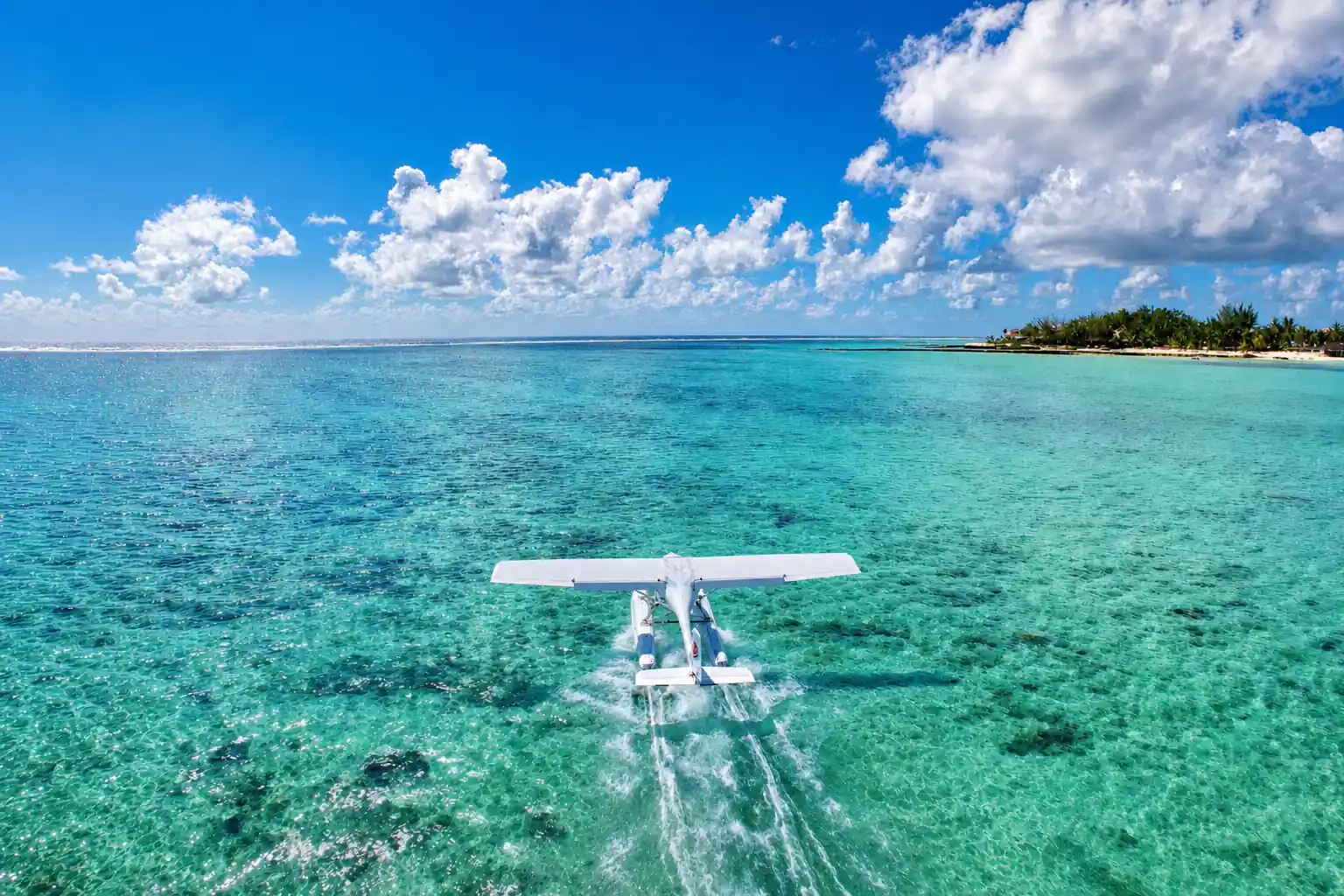
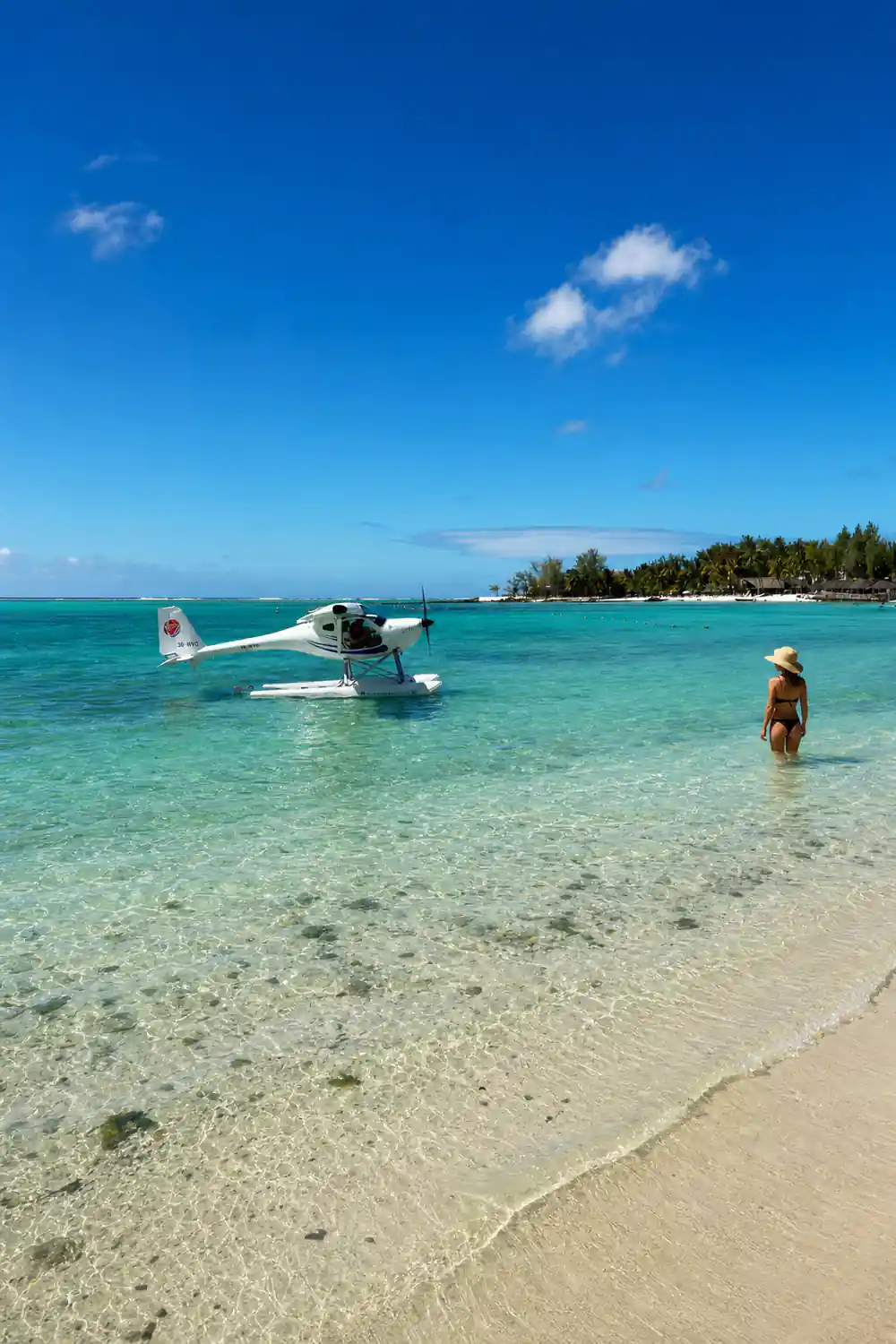
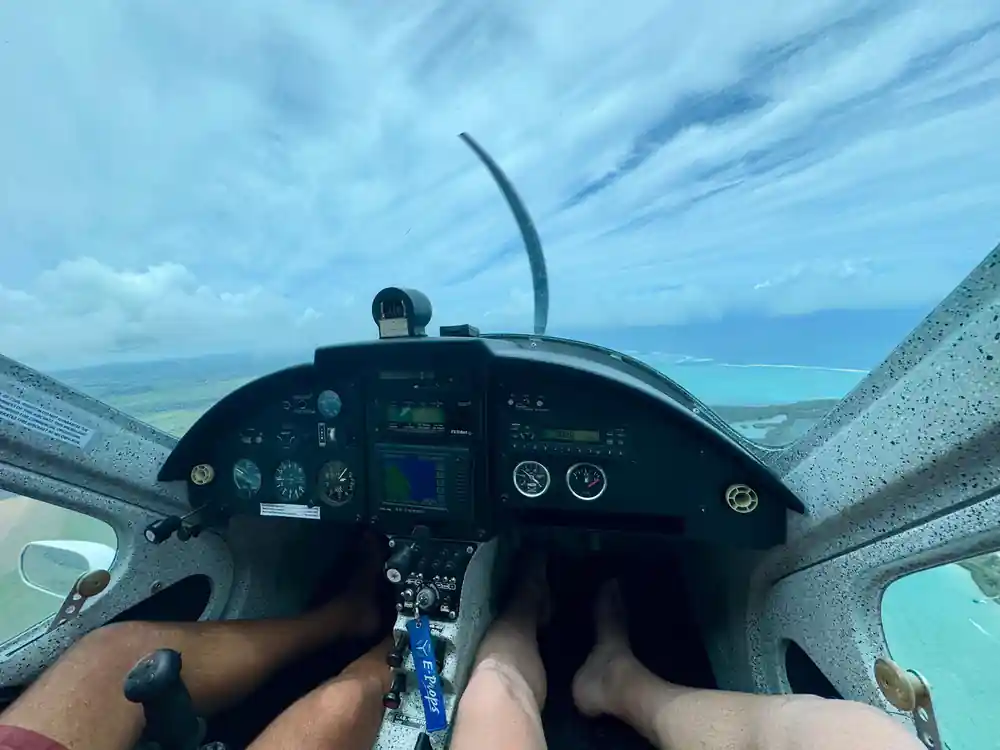
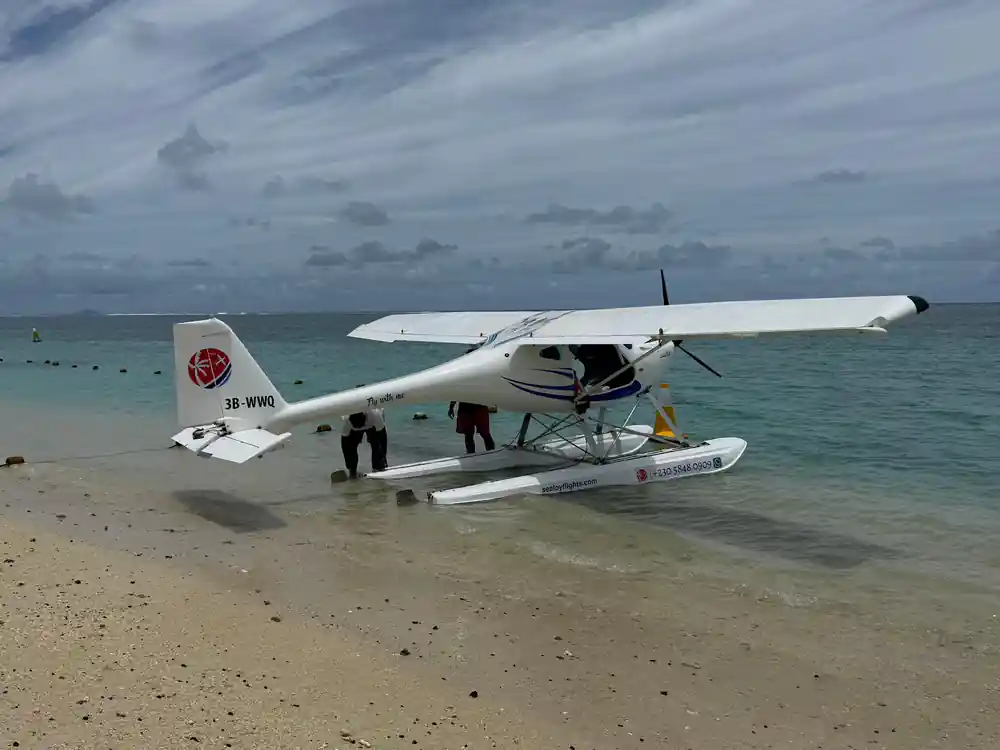
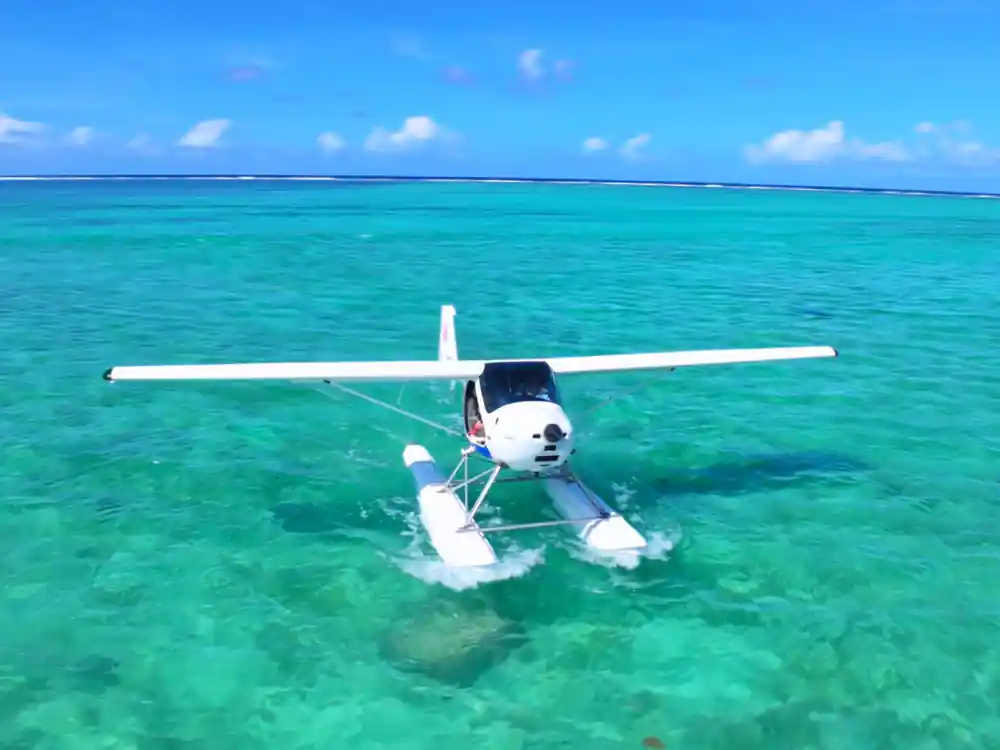
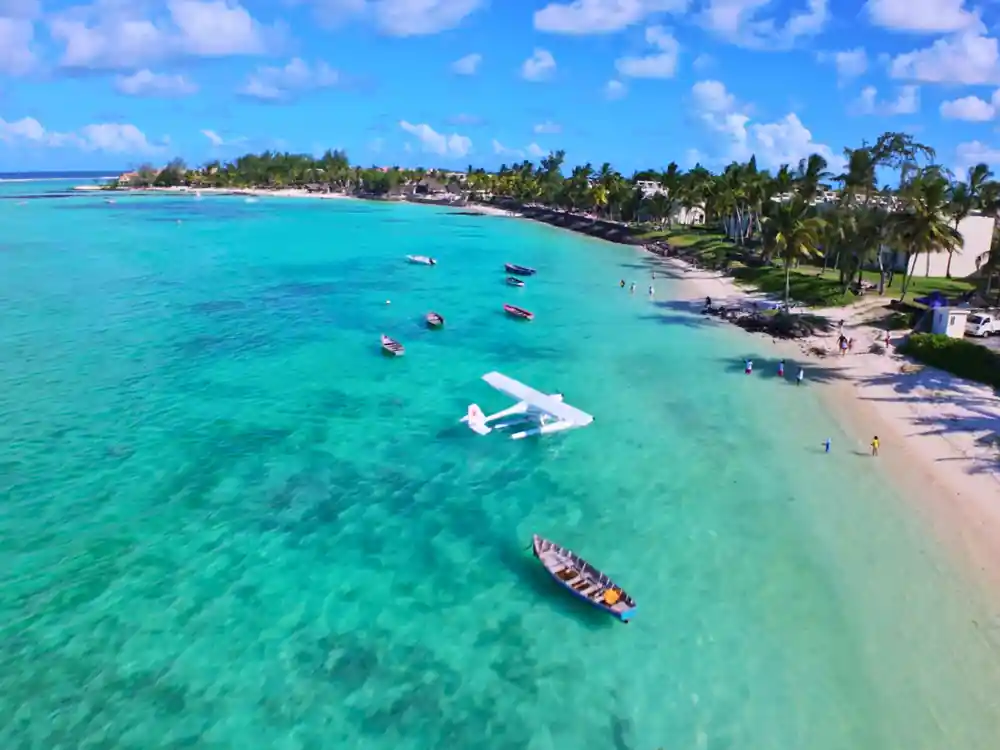
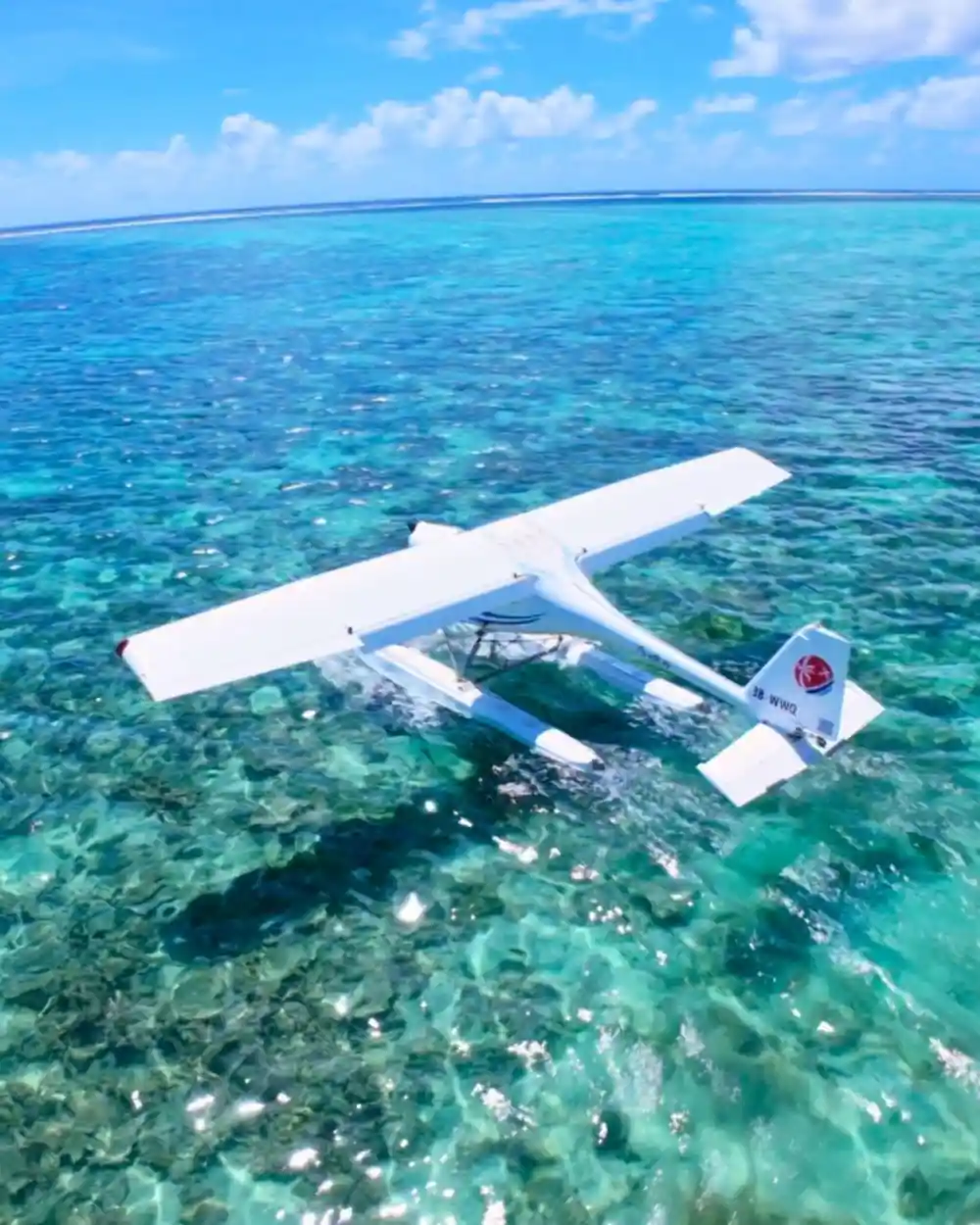
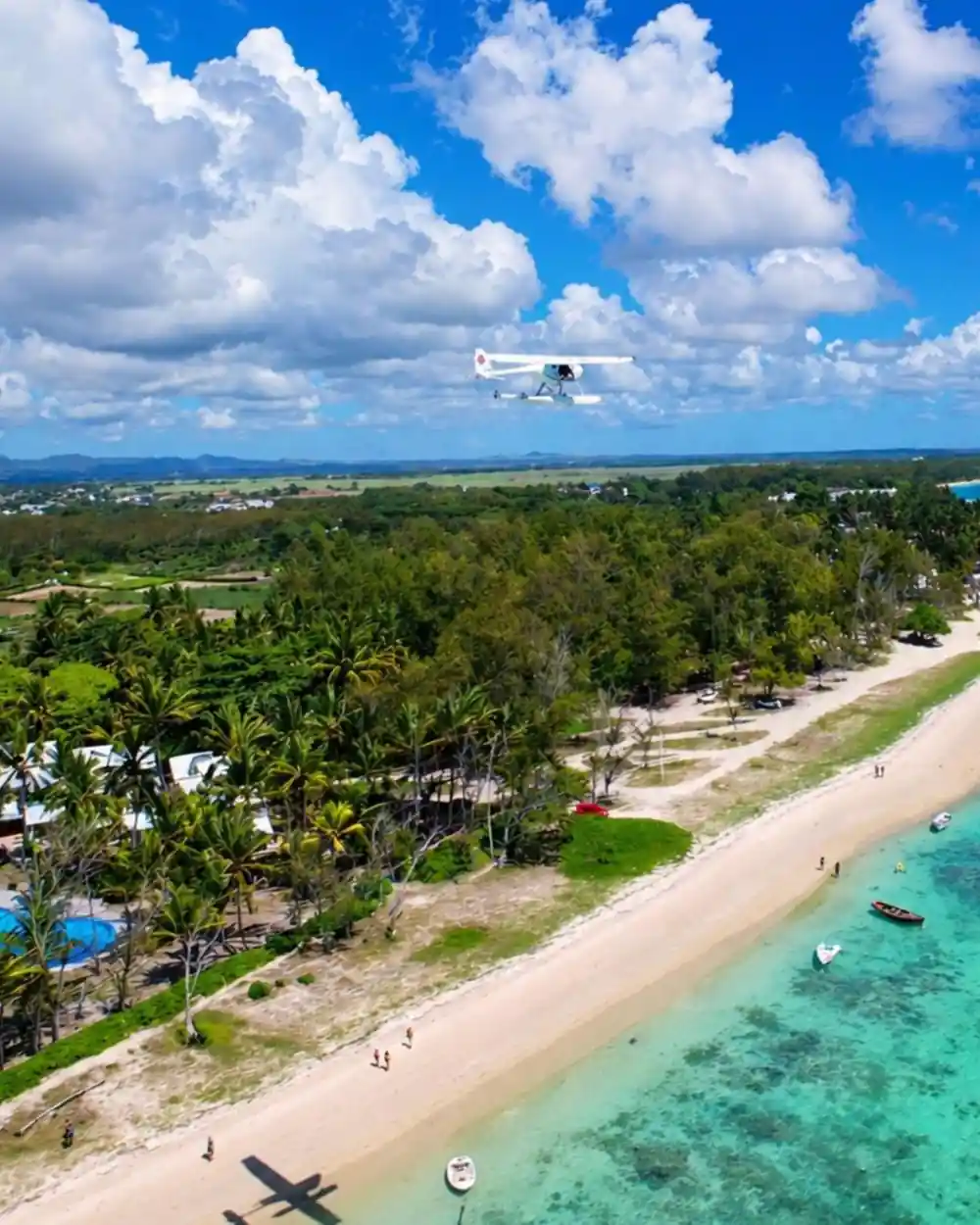
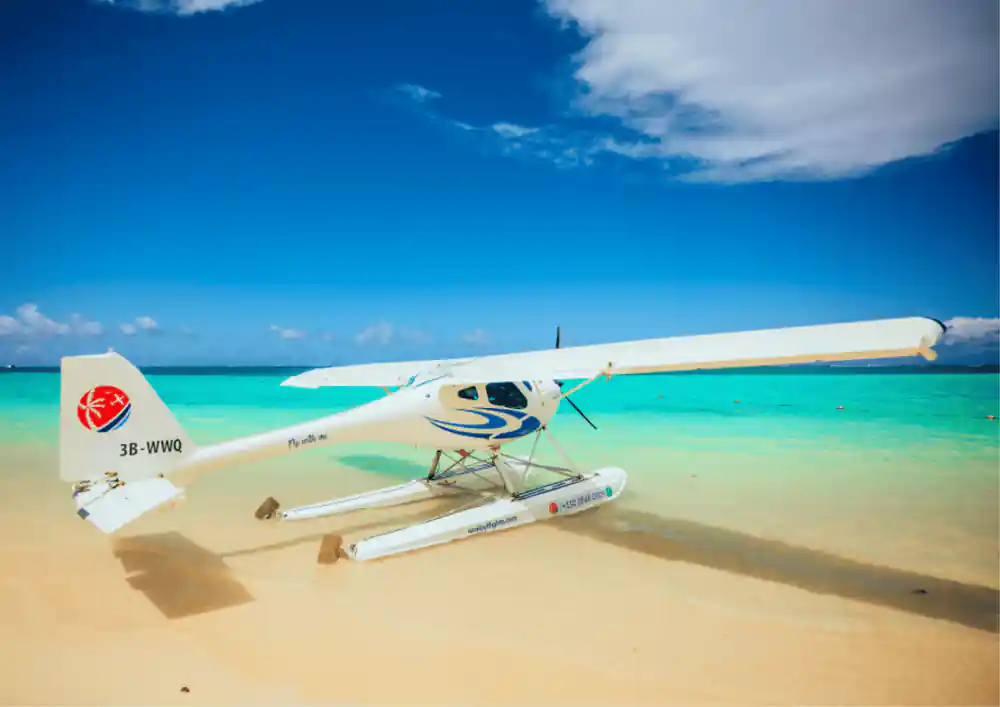
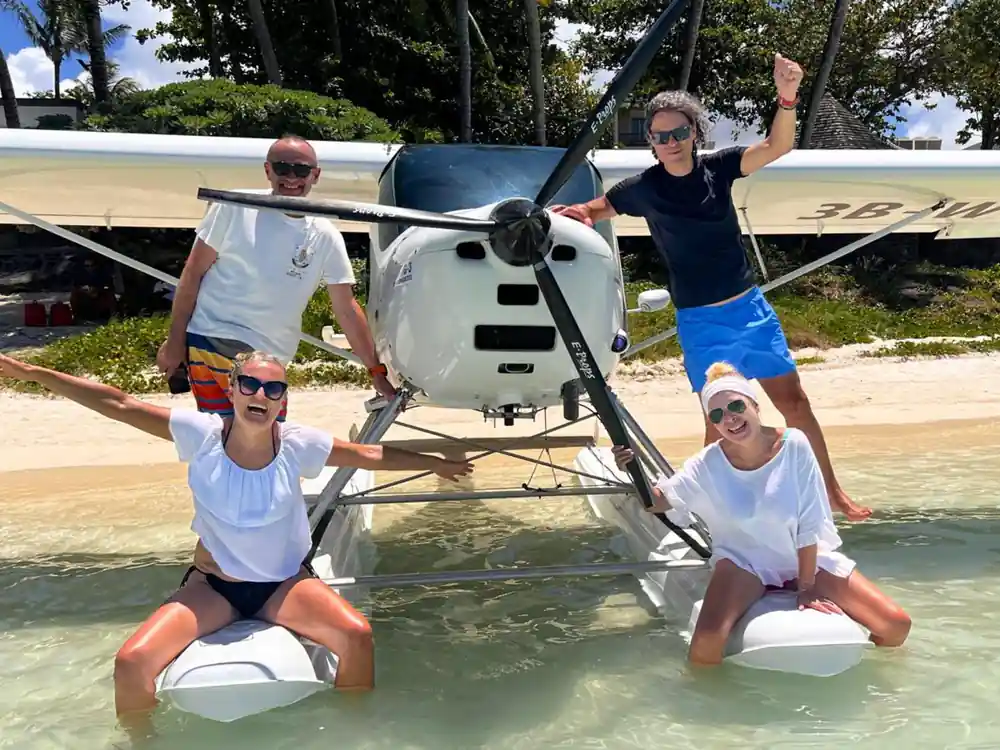
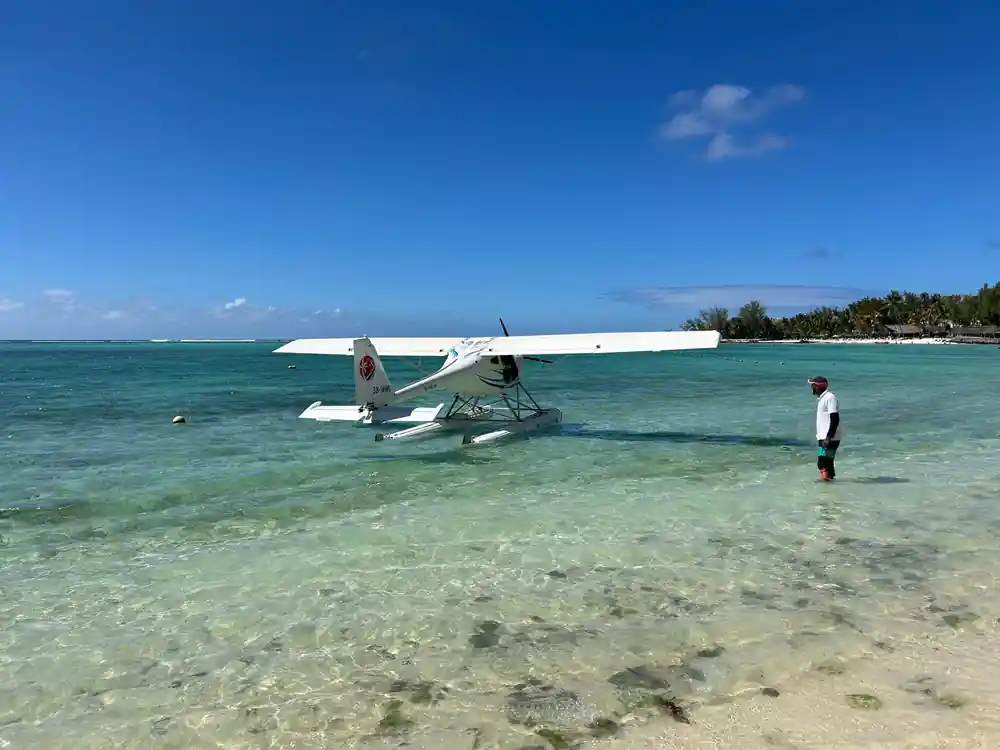
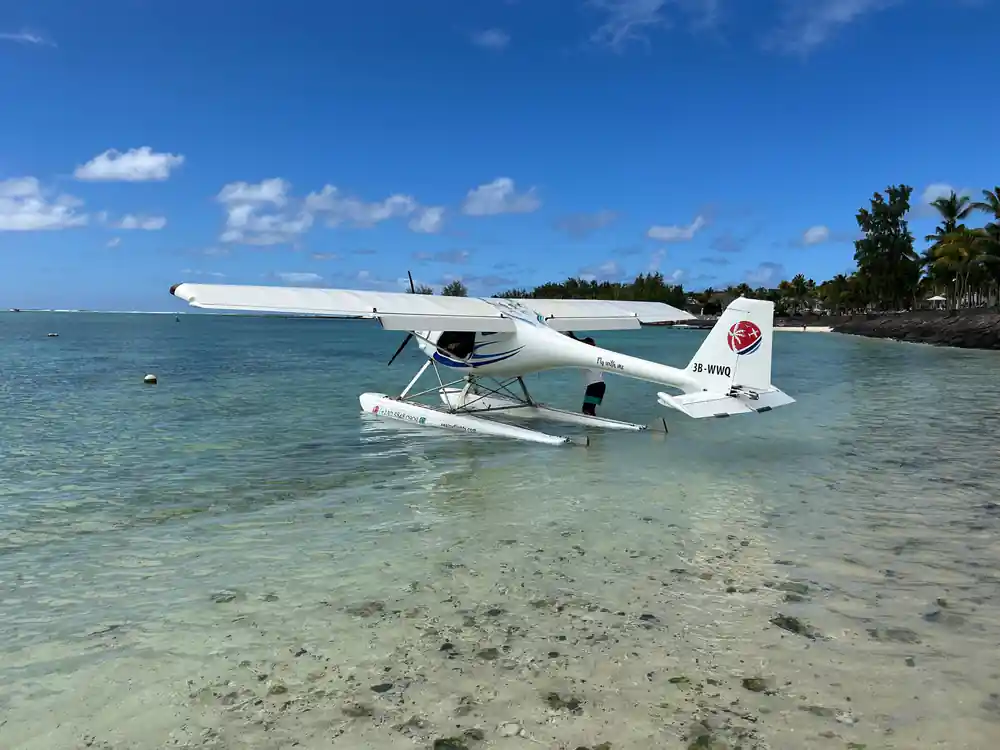
A small floatplane operates off the beach at Palmar, on the east coast of Mauritius between Belle Mare and Trou d'Eau Douce. It carries a pilot and a very small number of passengers, it takes off from the lagoon rather than from a runway, and it flies a loop over the water before landing back where it started. The booking is private, so the aircraft goes up with your party in it and nobody else.
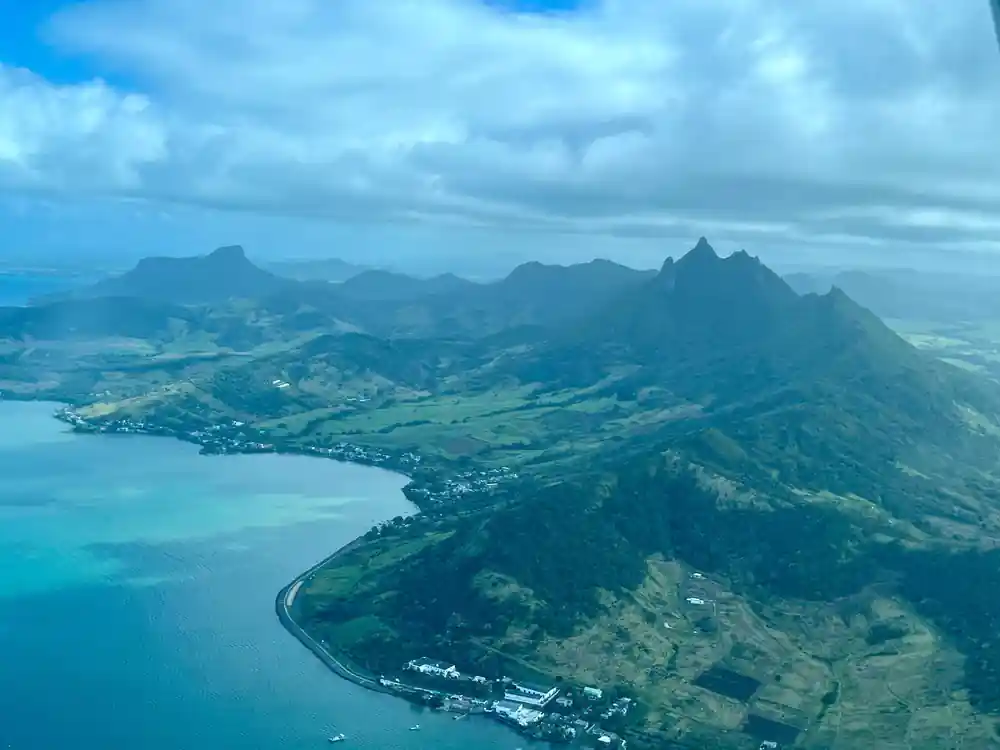
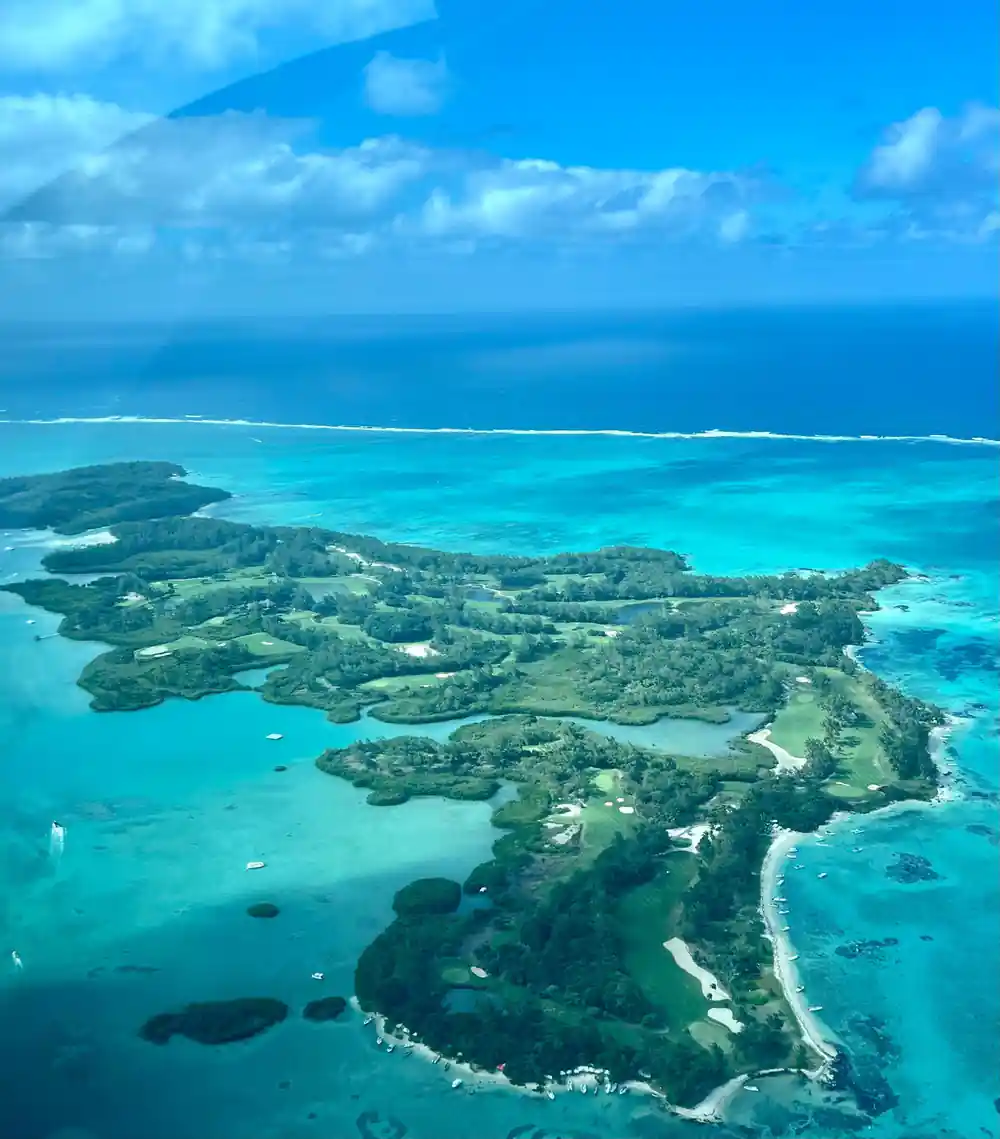
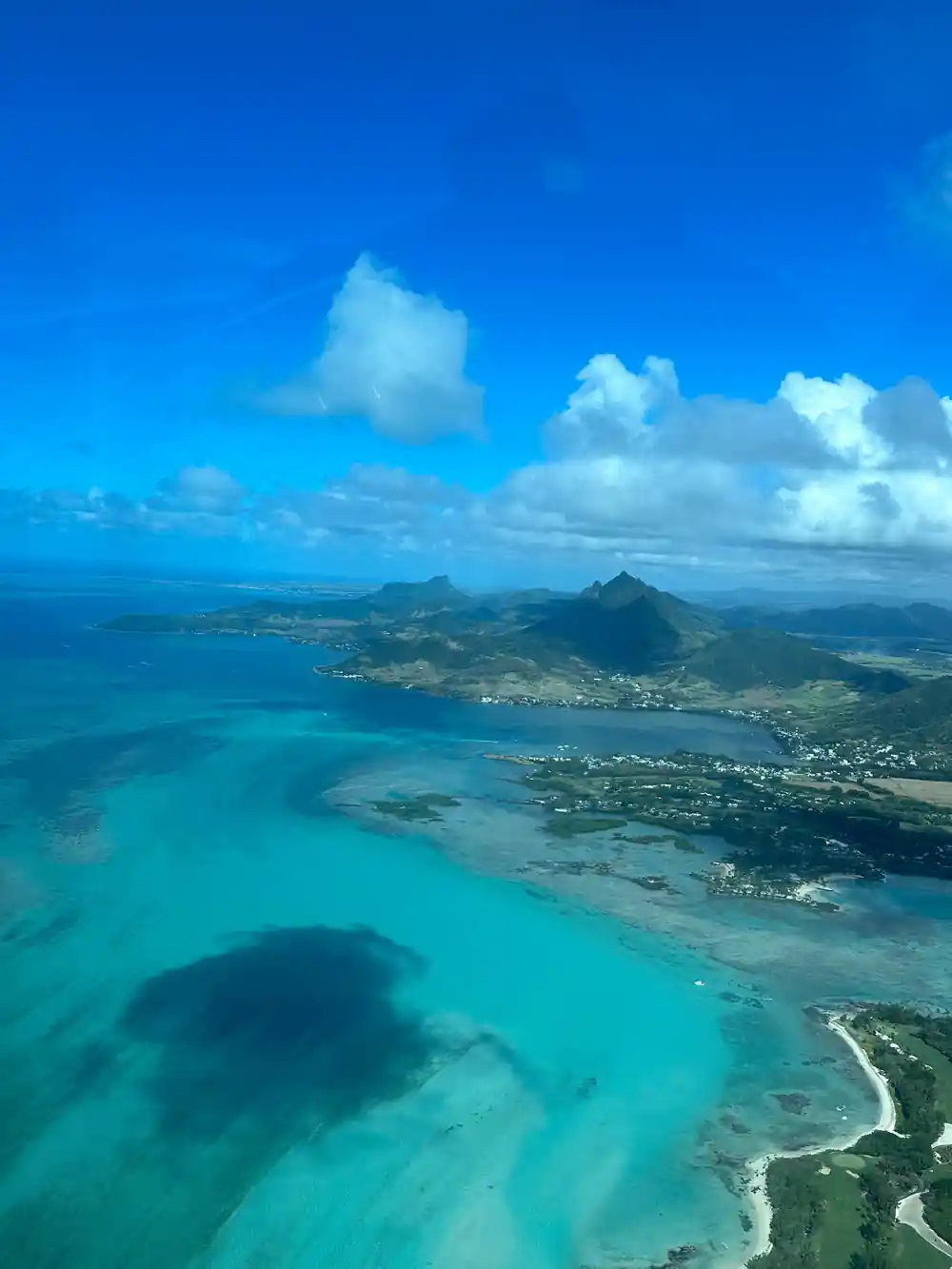
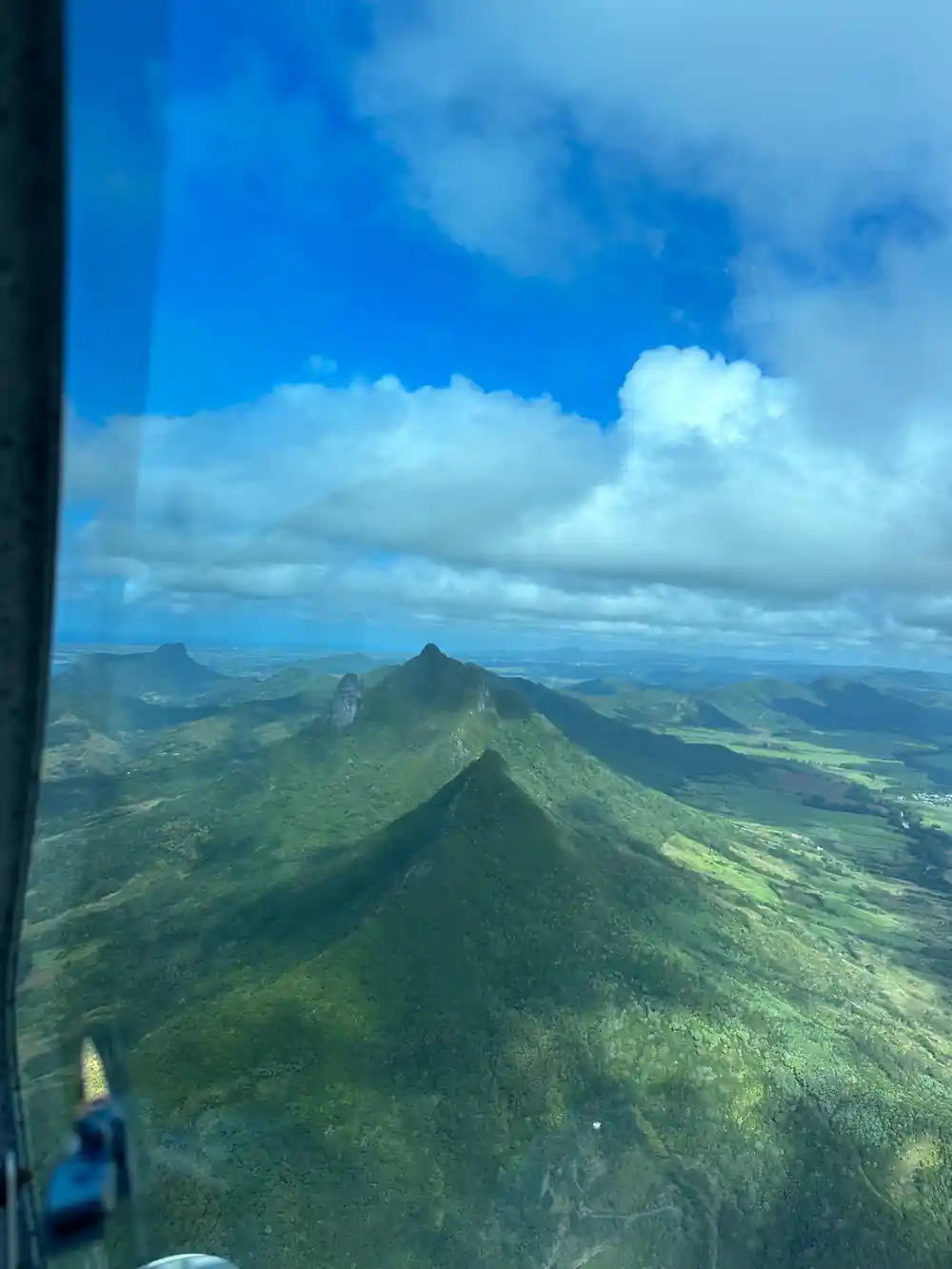
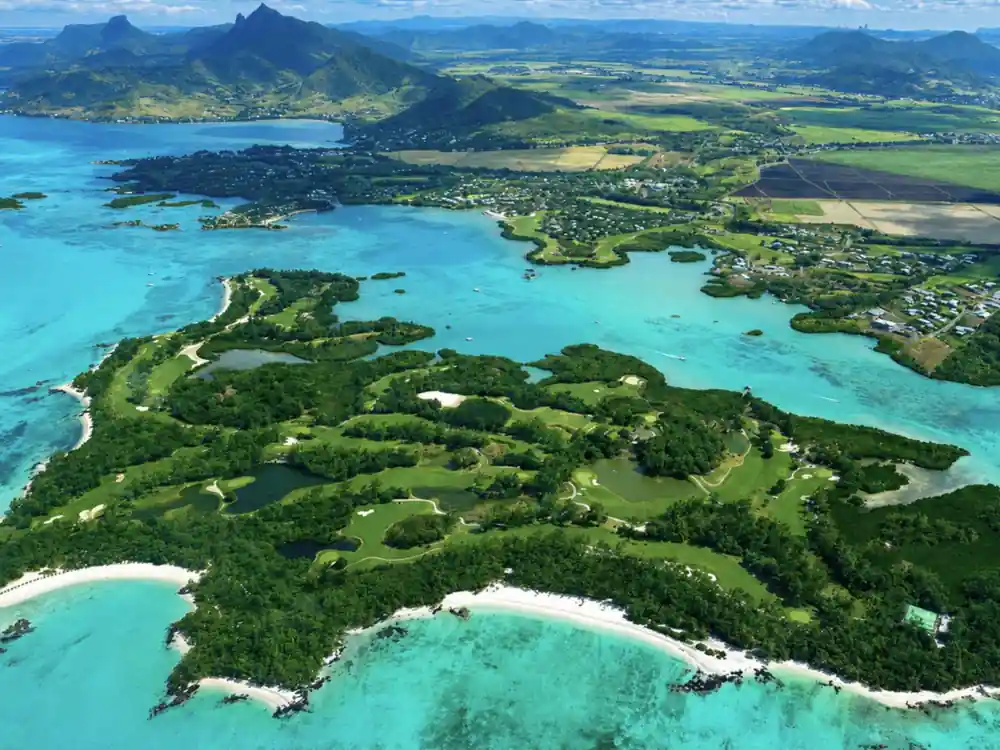
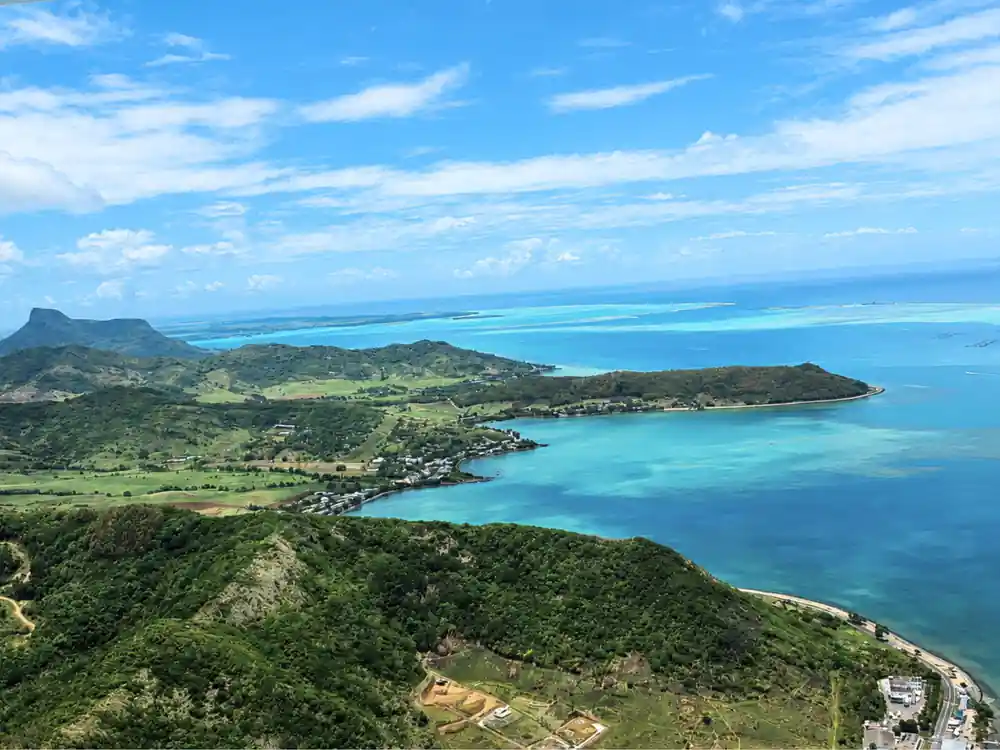
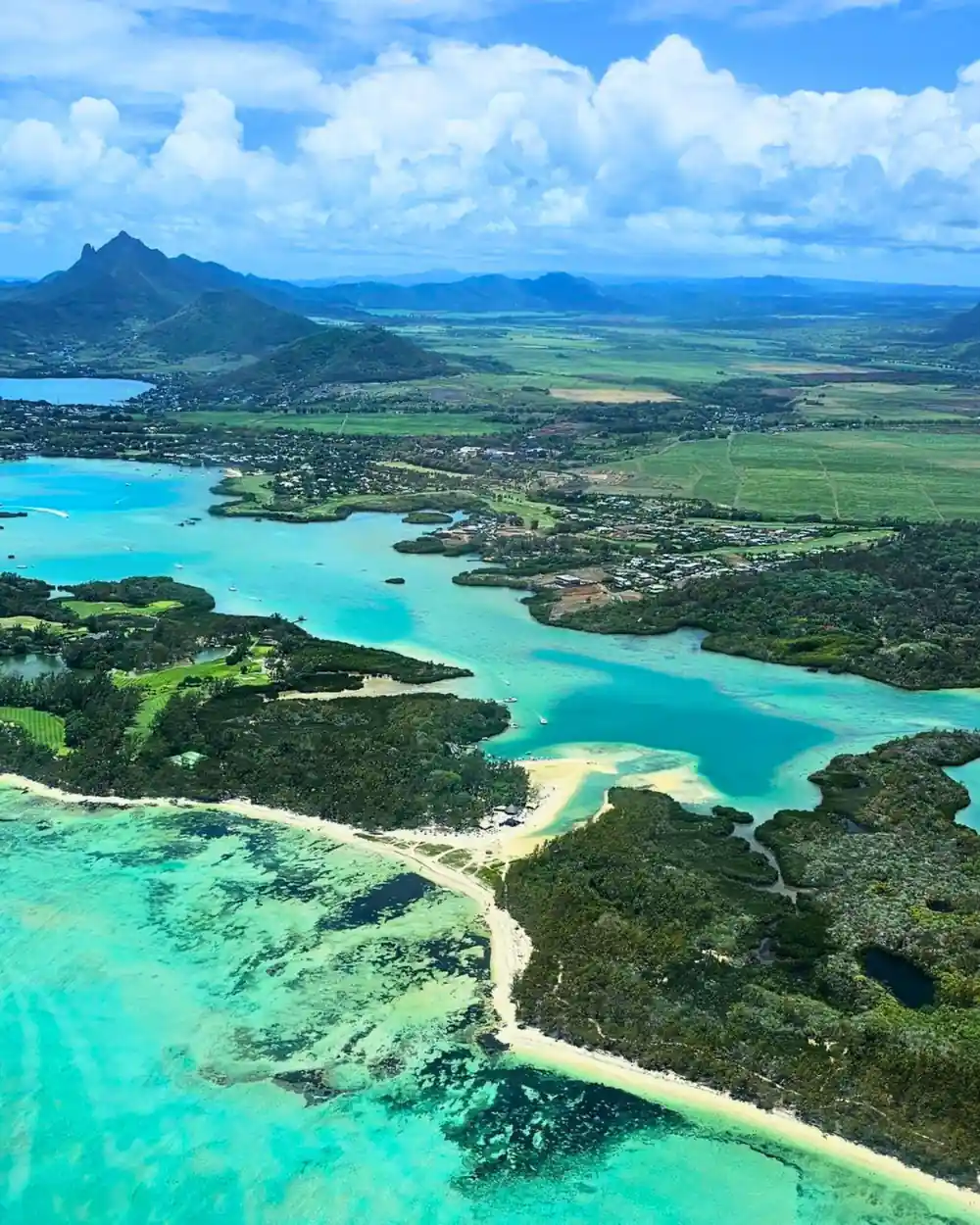
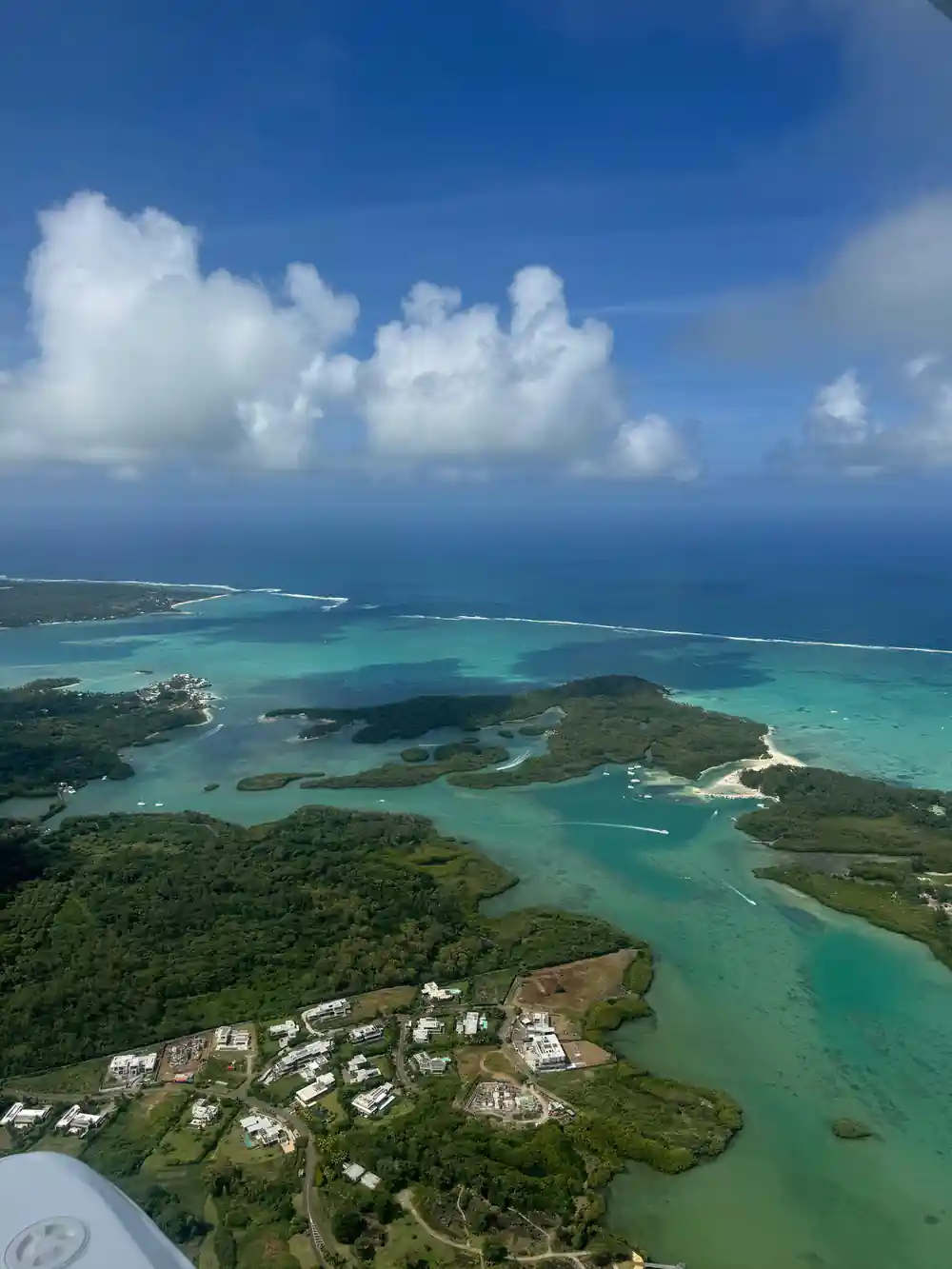
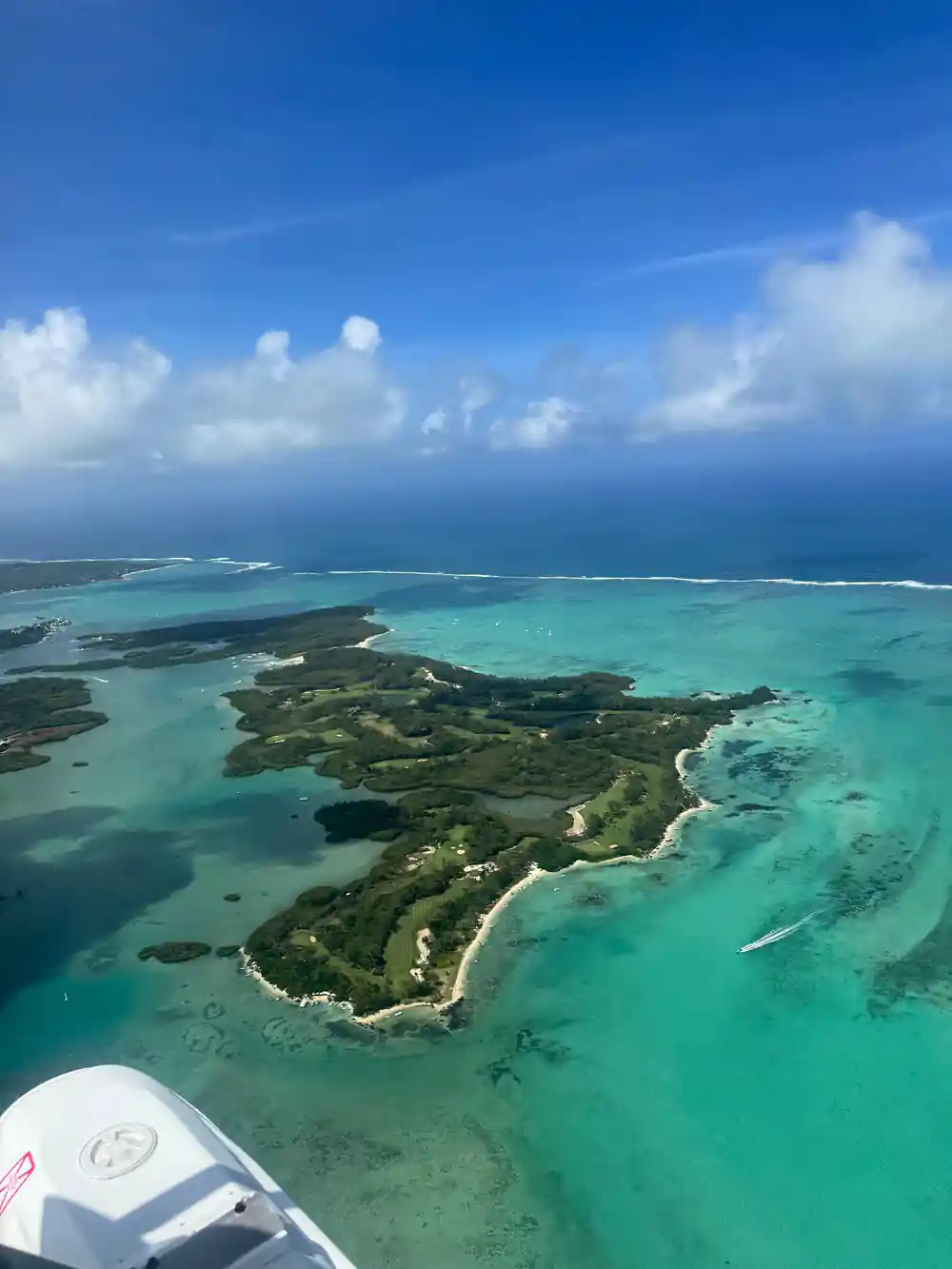
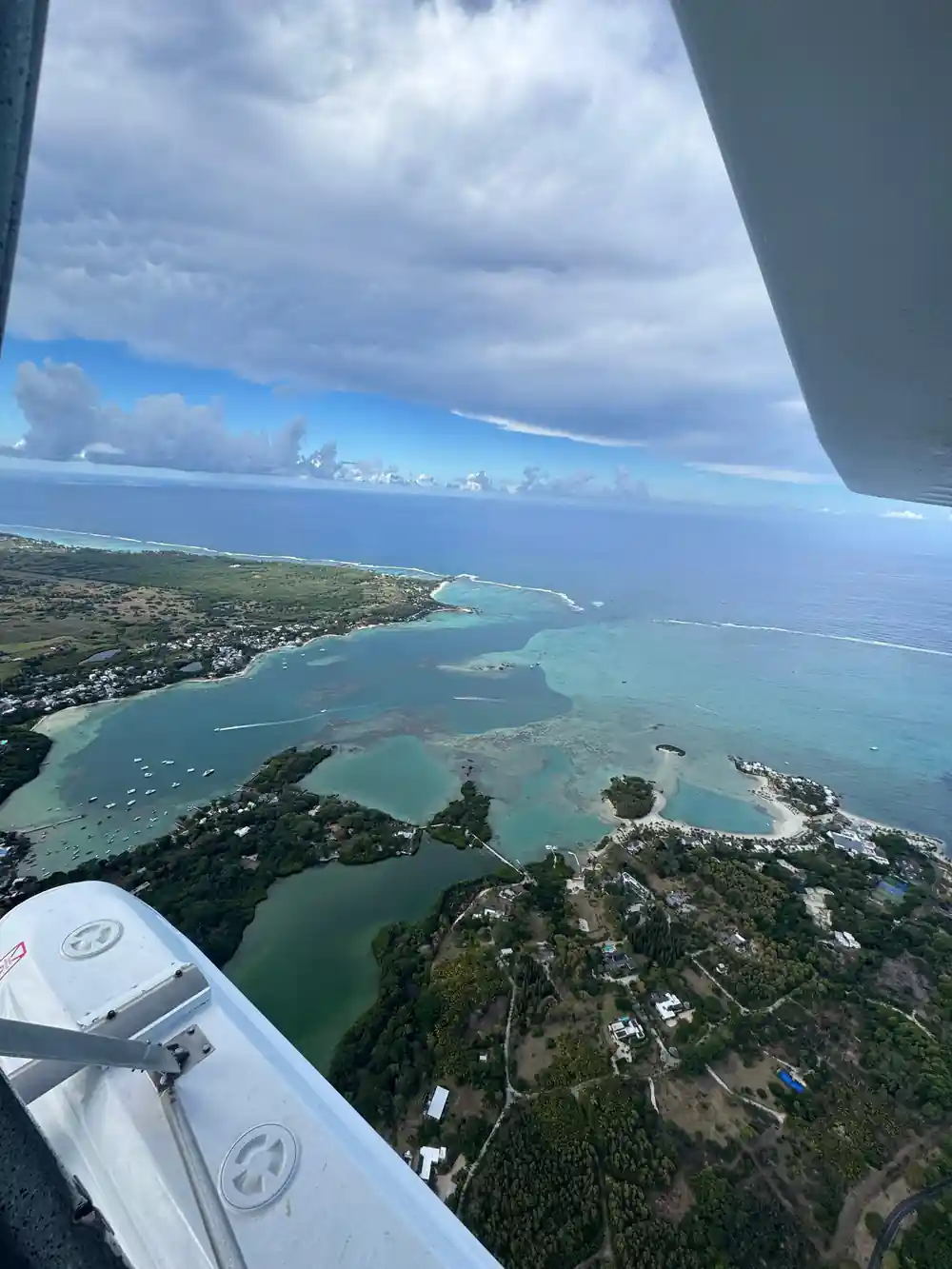
Three lengths are sold and they are genuinely different flights rather than the same route stretched. The fifteen minute option stays local: the lagoon off Palmar and Belle Mare, the shallow banks, and the approach to Ile aux Cerfs. The twenty minute option is the one most people book, because it adds the eastern underwater waterfall off Grand River South East. The thirty minute option runs further south again and brings in Lion Mountain and the coast down towards the bay, which is the fullest version of the east coast you can see in one go.
None of it involves landing anywhere else. The aircraft returns to the same stretch of water it left from, and the whole appointment, briefing included, is comfortably inside an hour even for the longest flight.
Why the east coast is the one worth flying
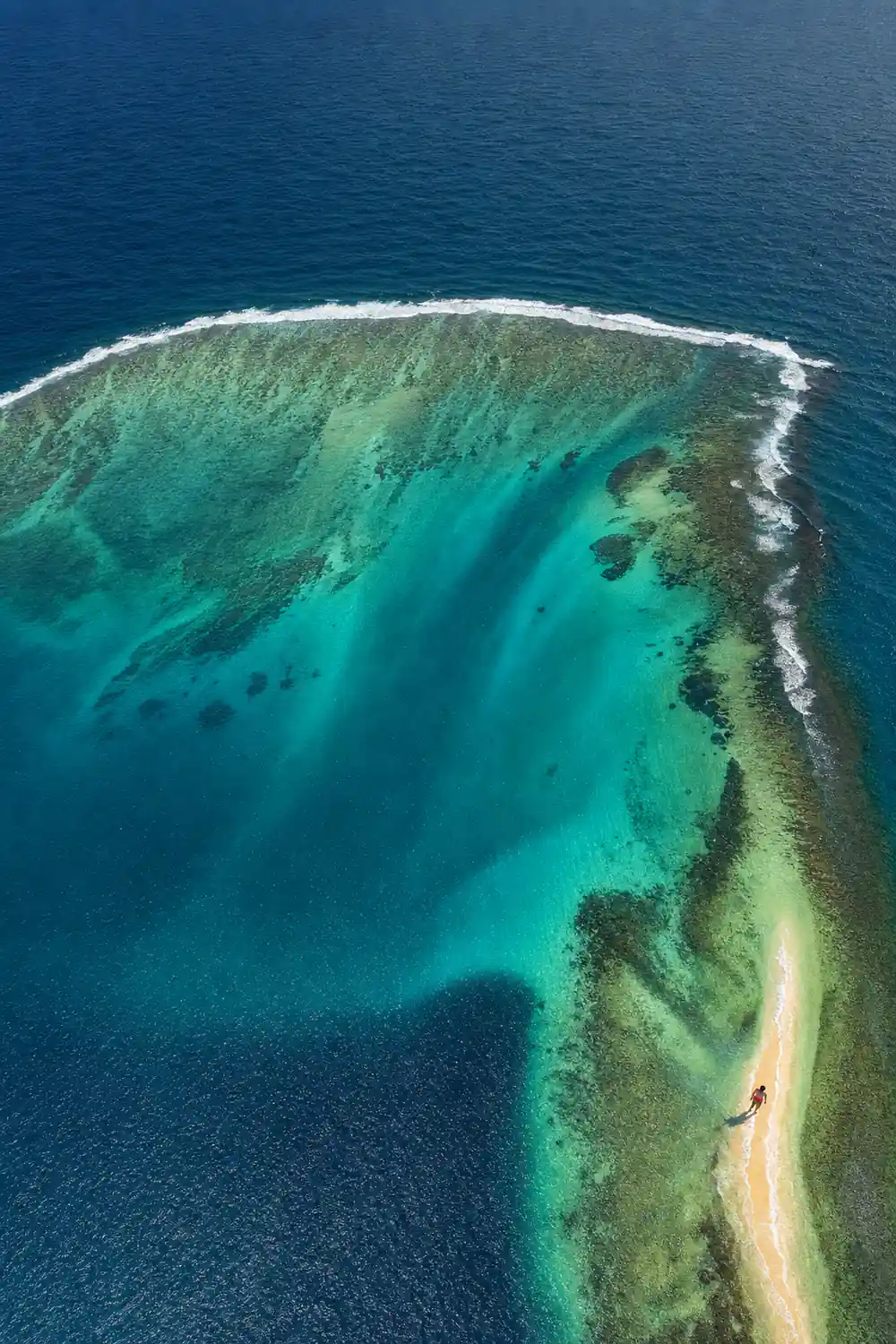
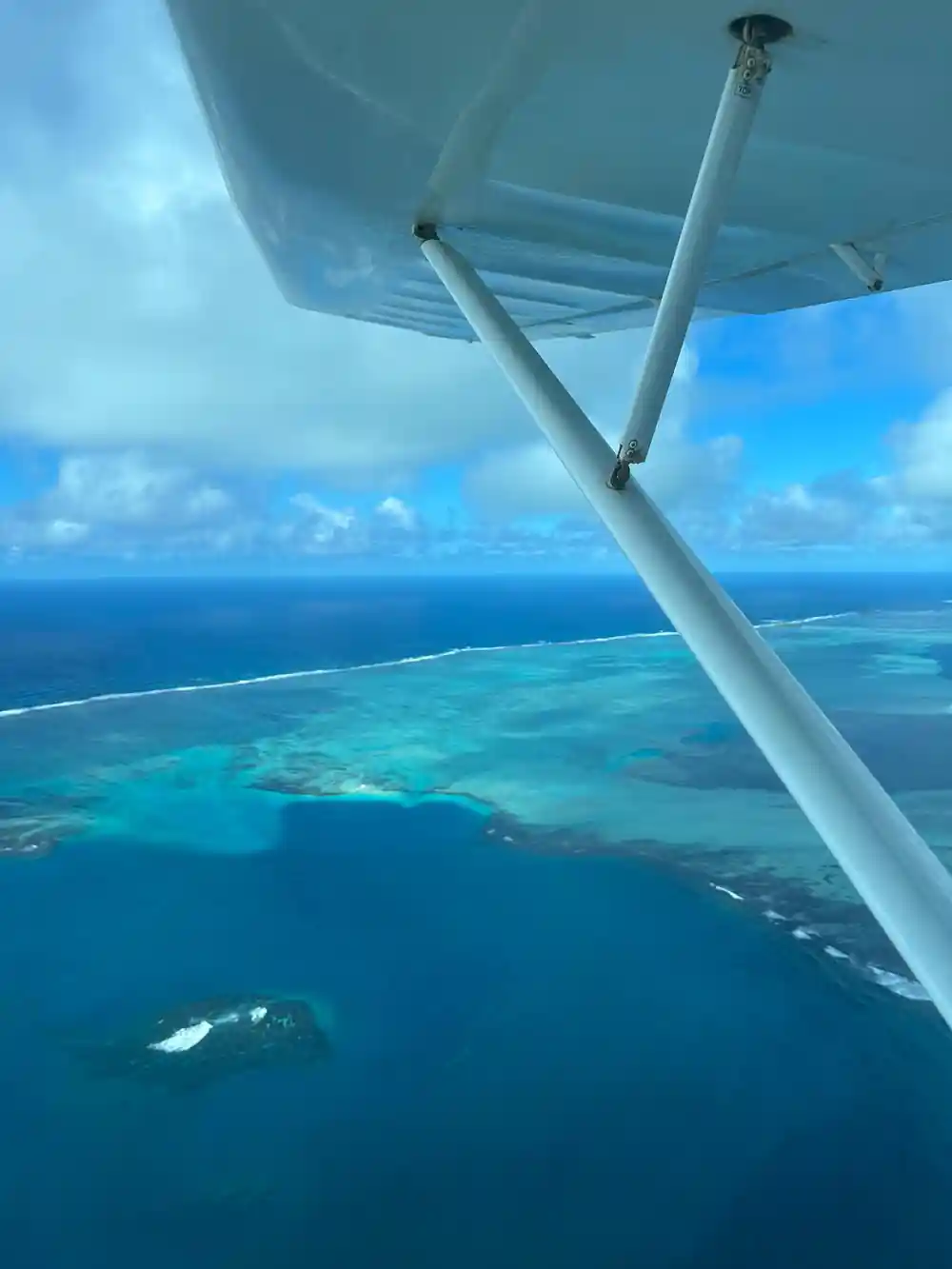
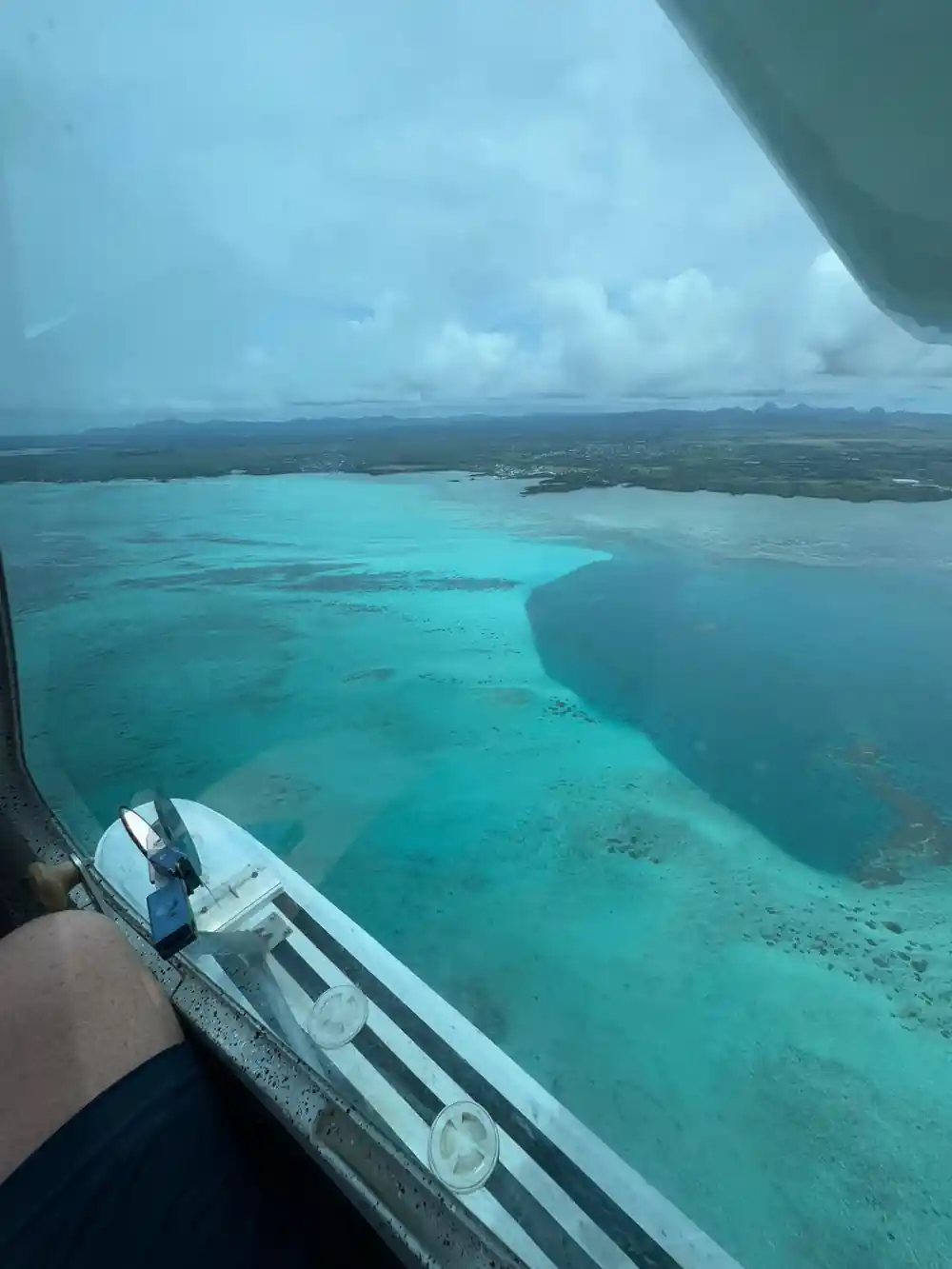
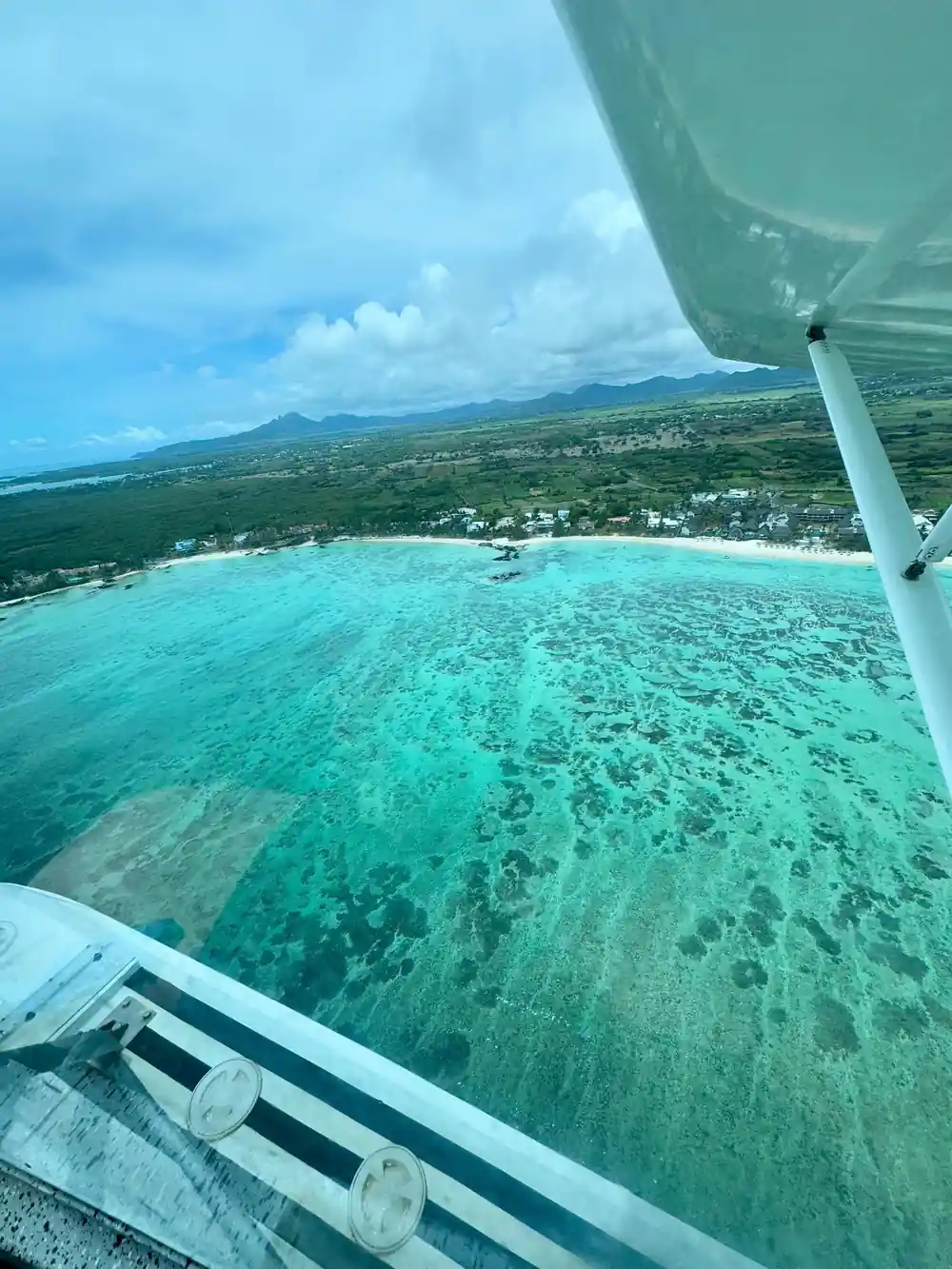
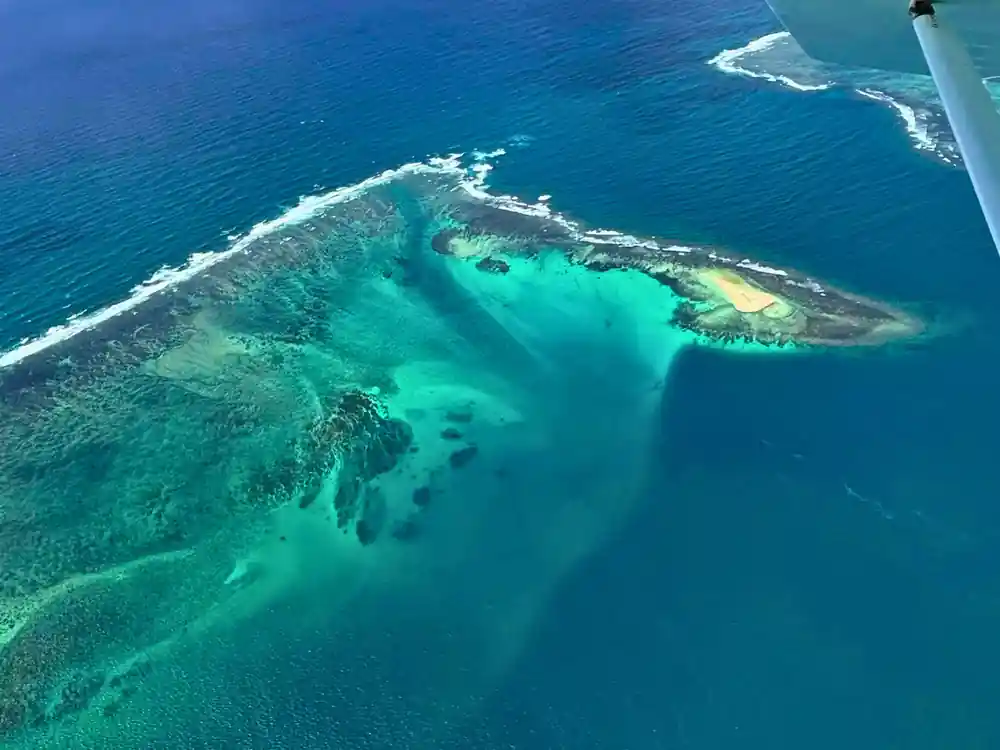
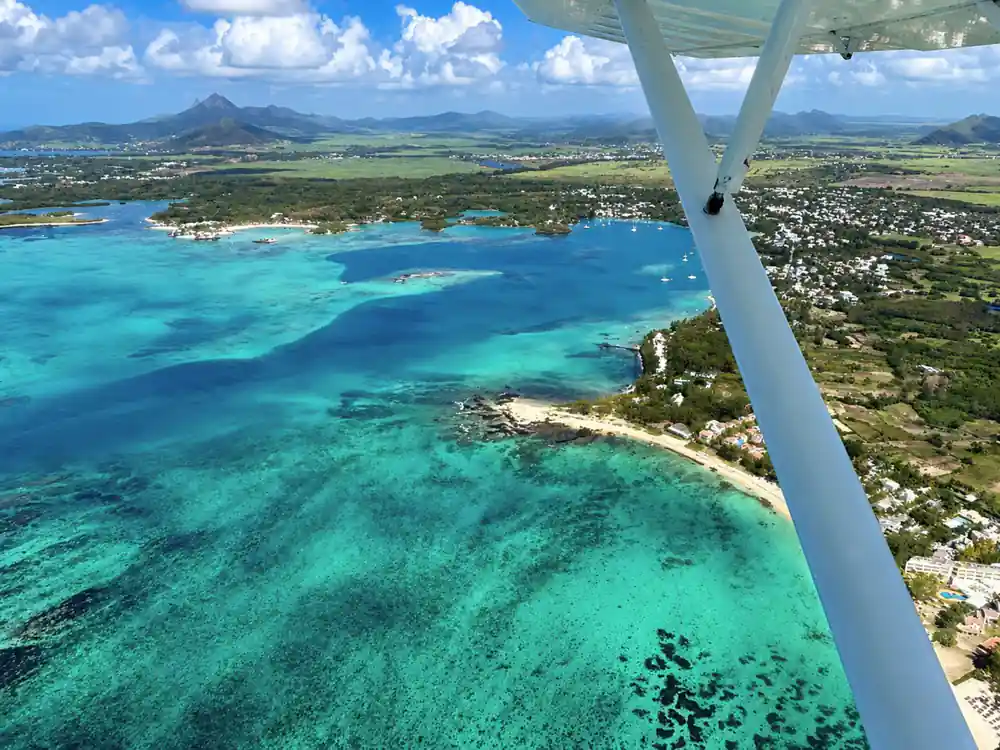
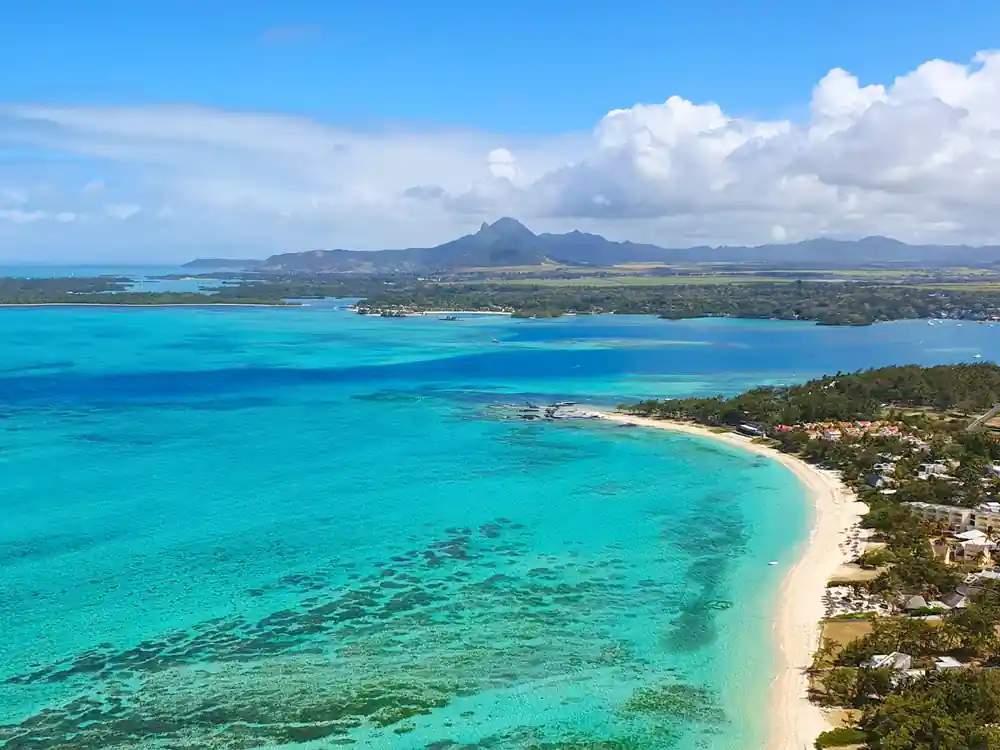
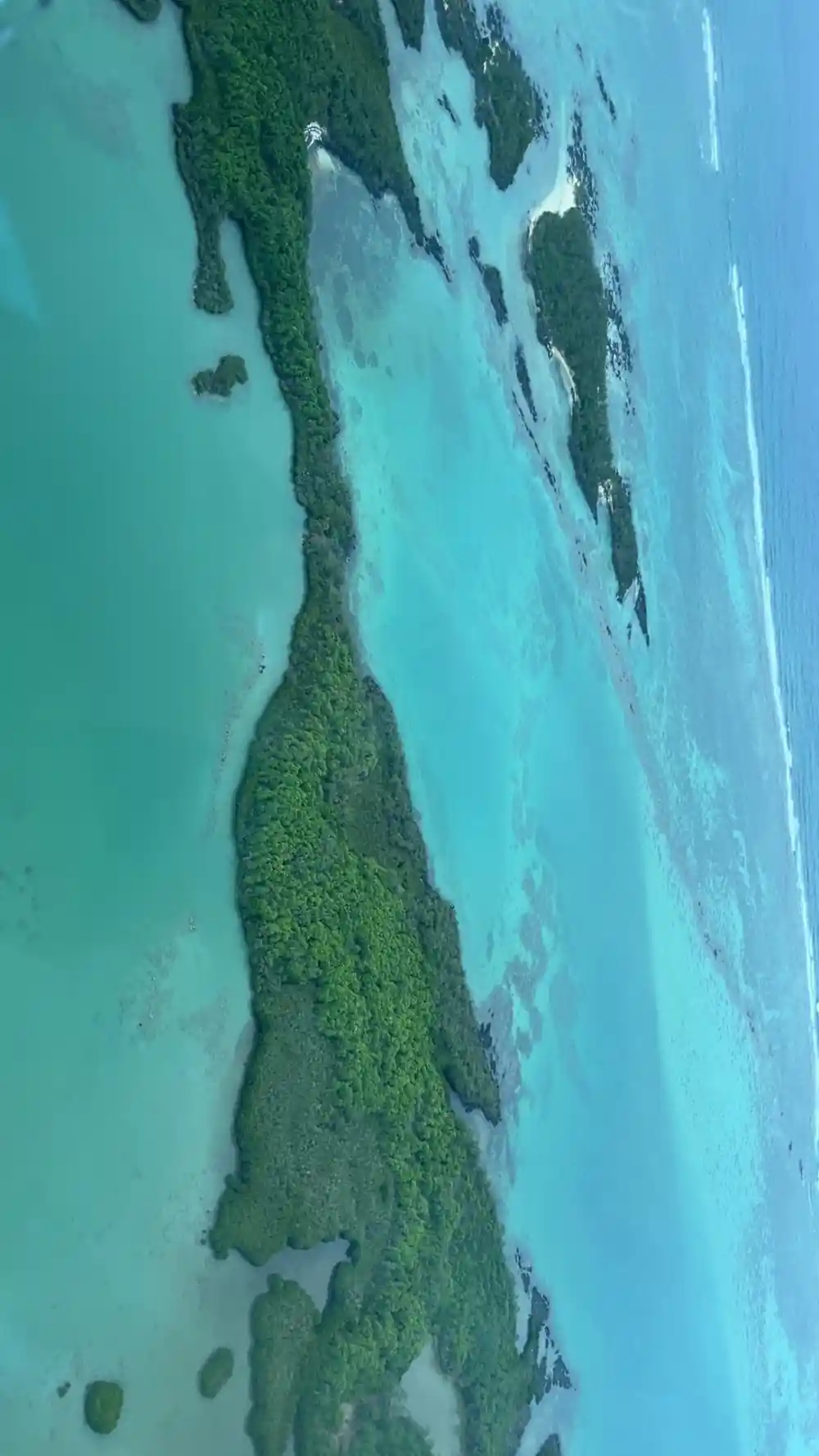
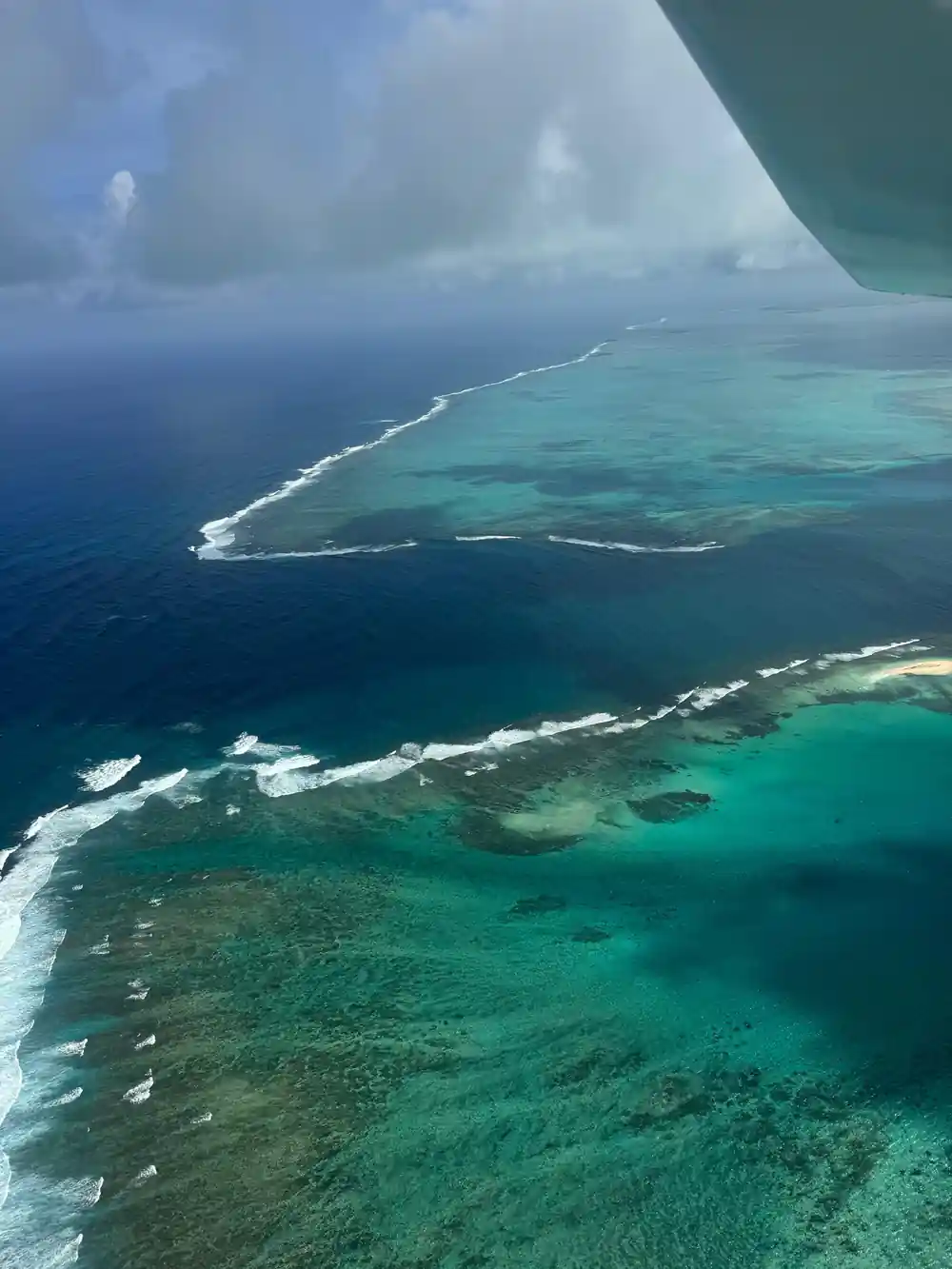
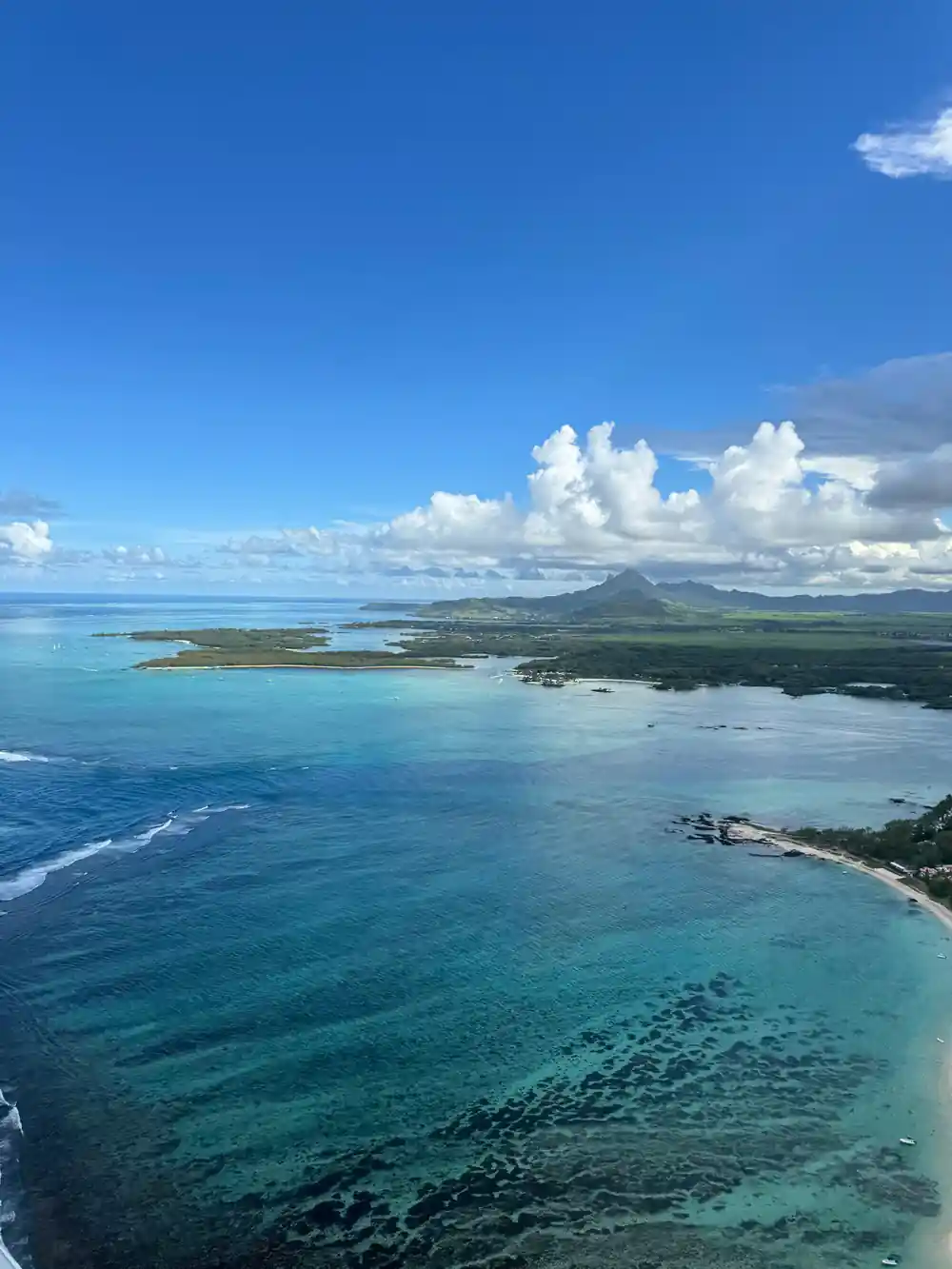
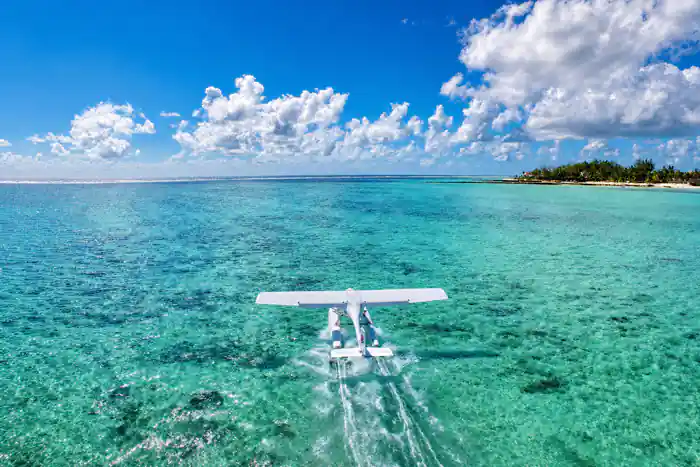
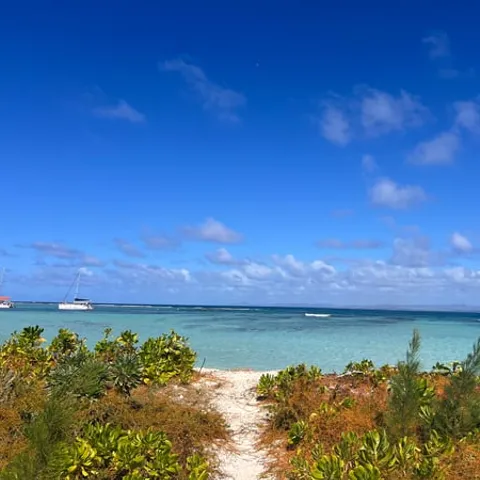
Mauritius is ringed almost entirely by reef, but the lagoon it encloses is not the same width everywhere. On the east the reef stands a long way offshore, and the water it holds is the largest continuous lagoon on the island. That is the surface the whole flight is spent above, and its size is the thing that does not survive a photograph taken from a beach.
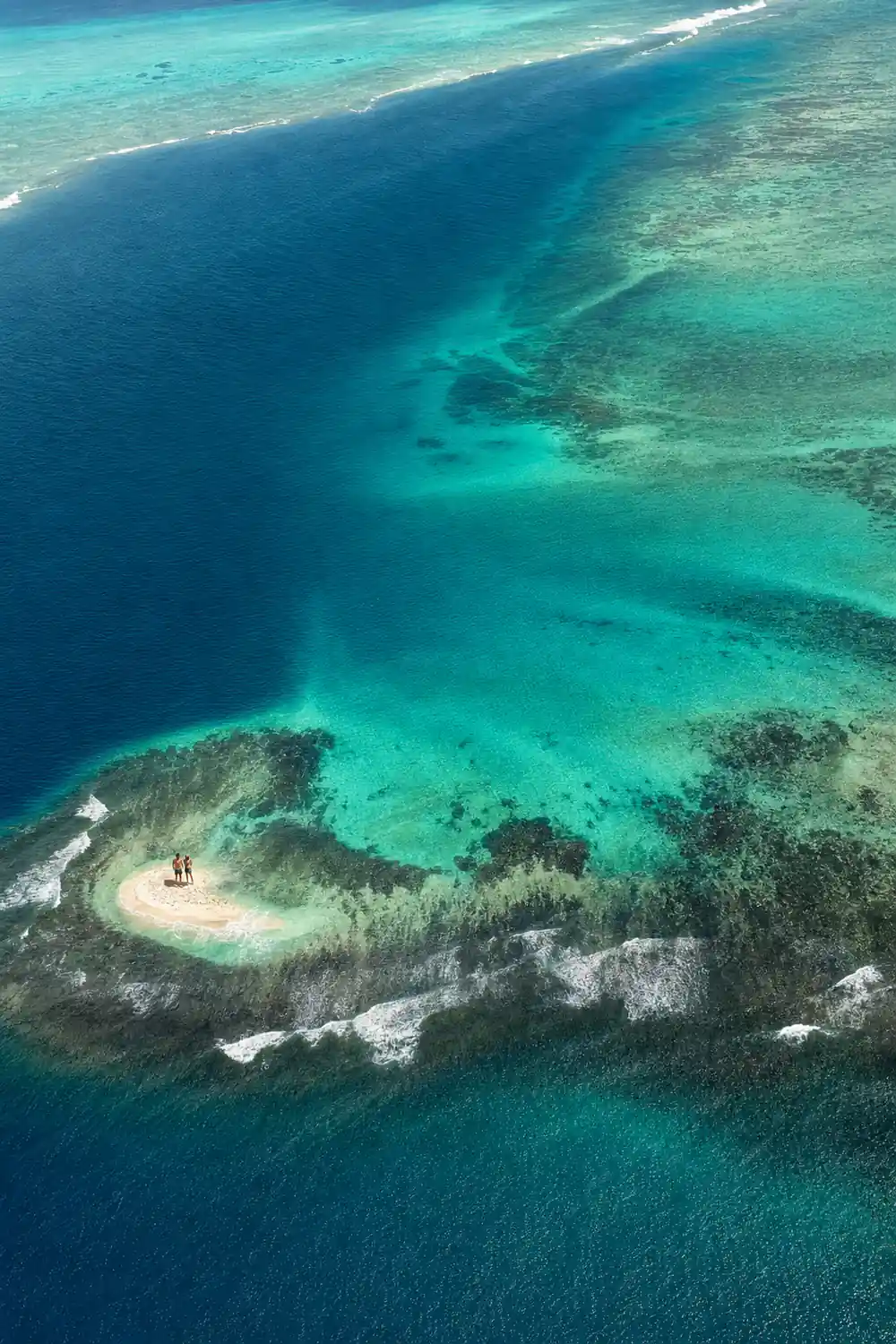
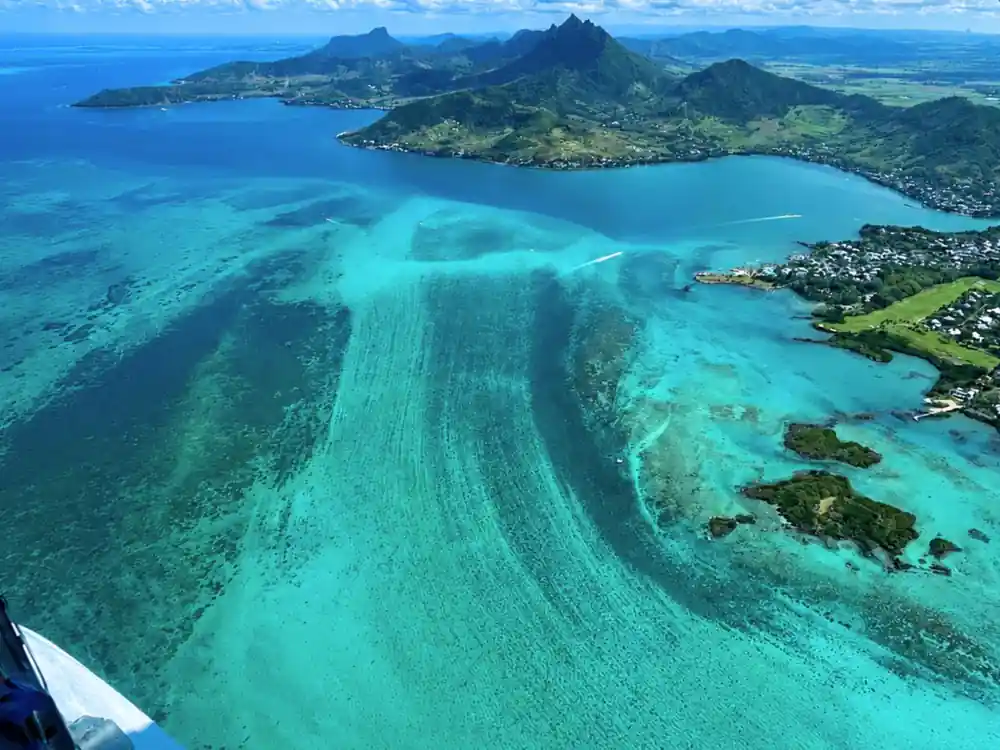
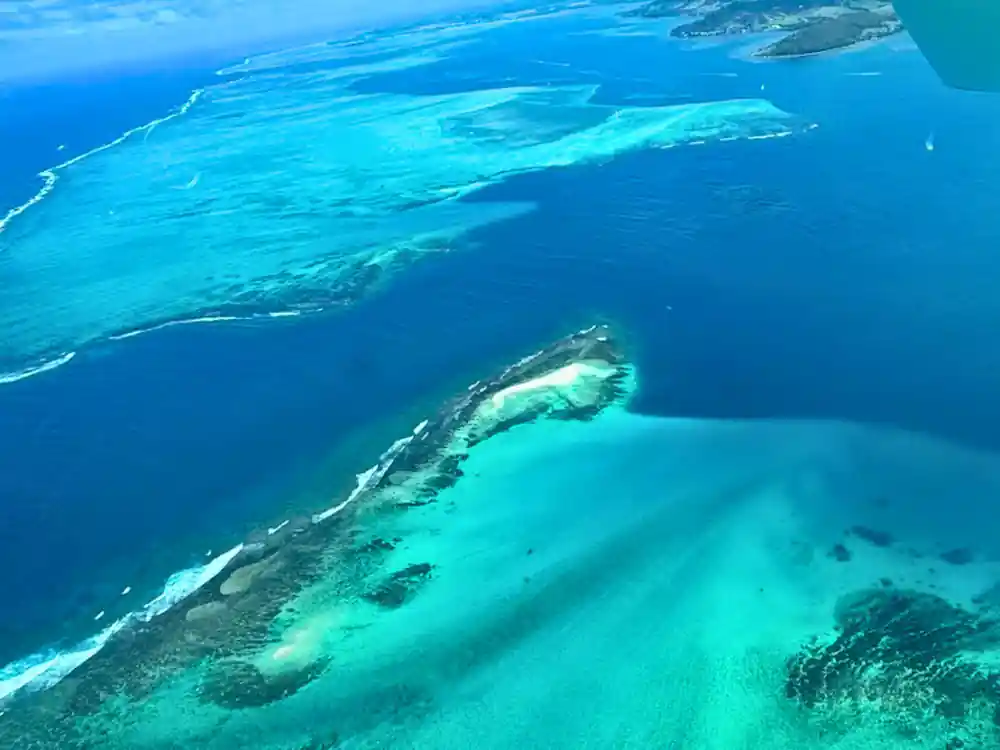
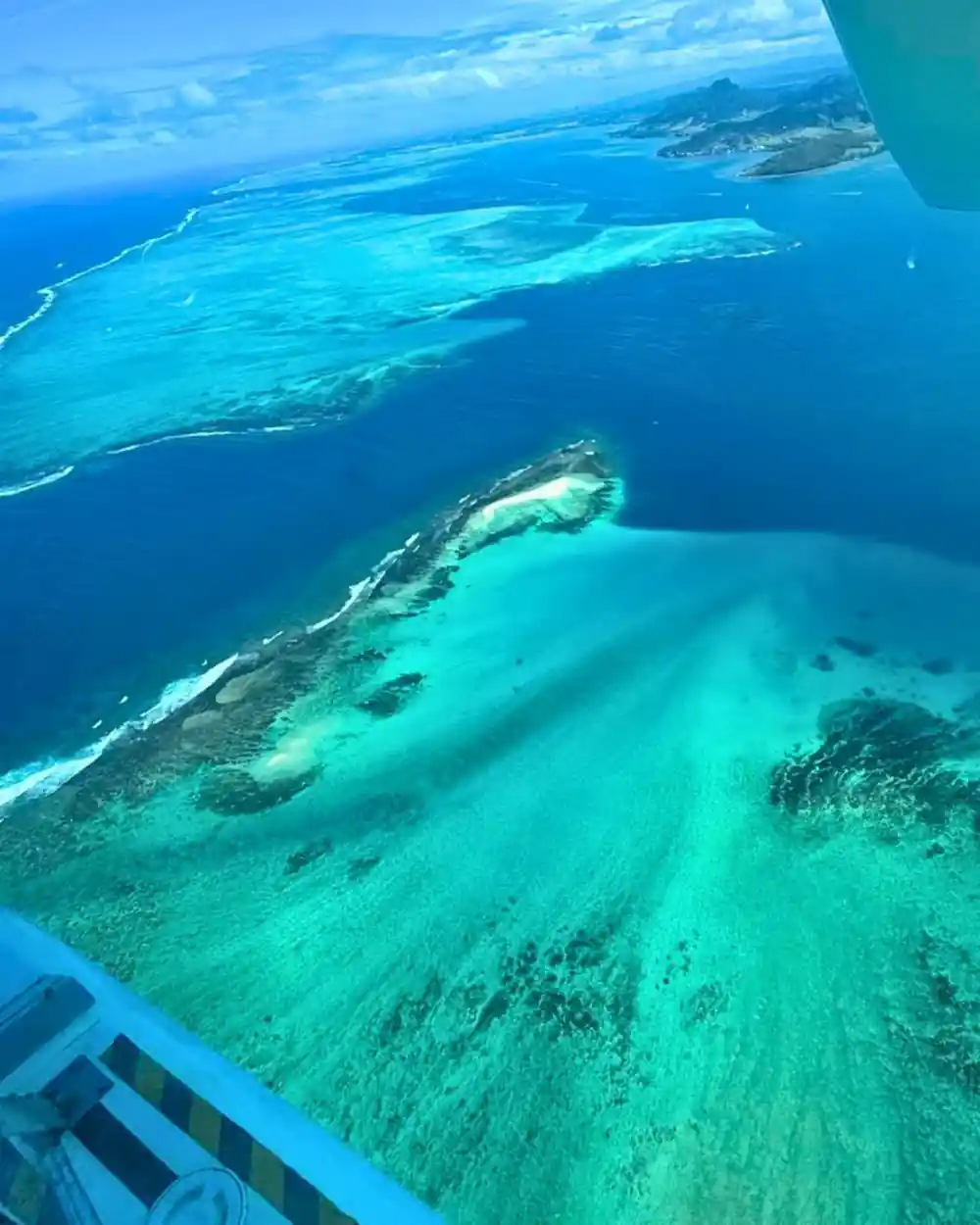
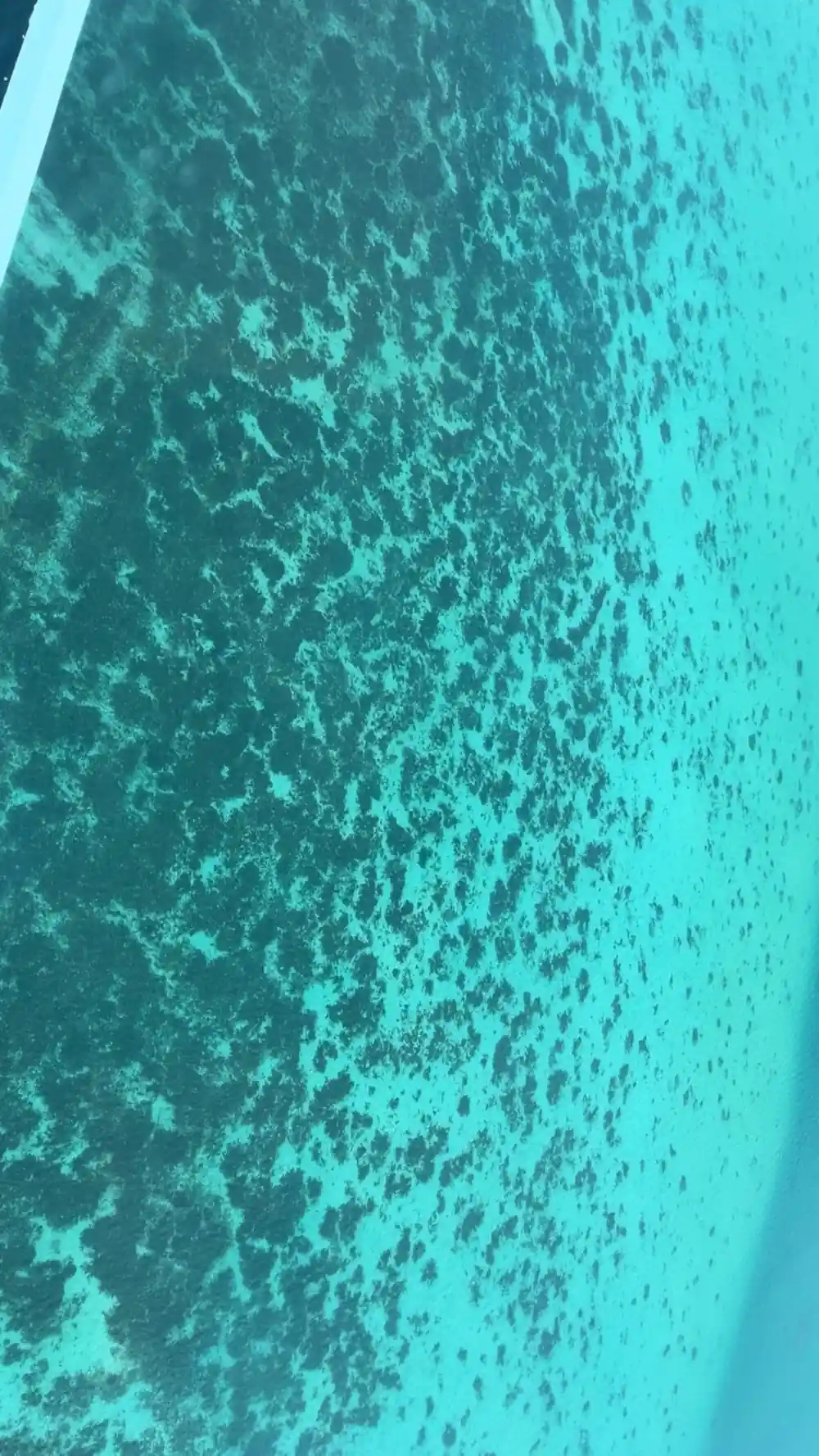
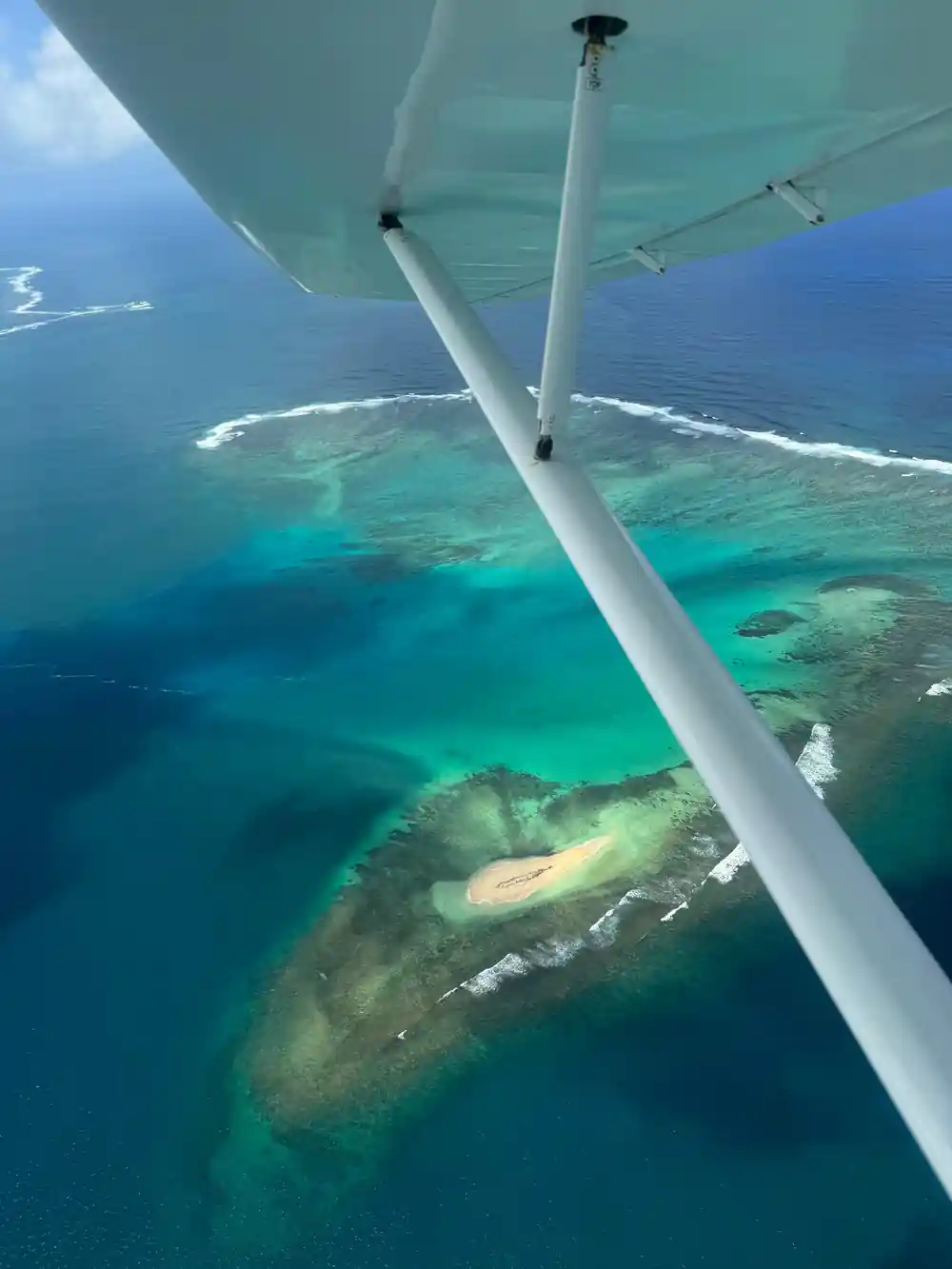
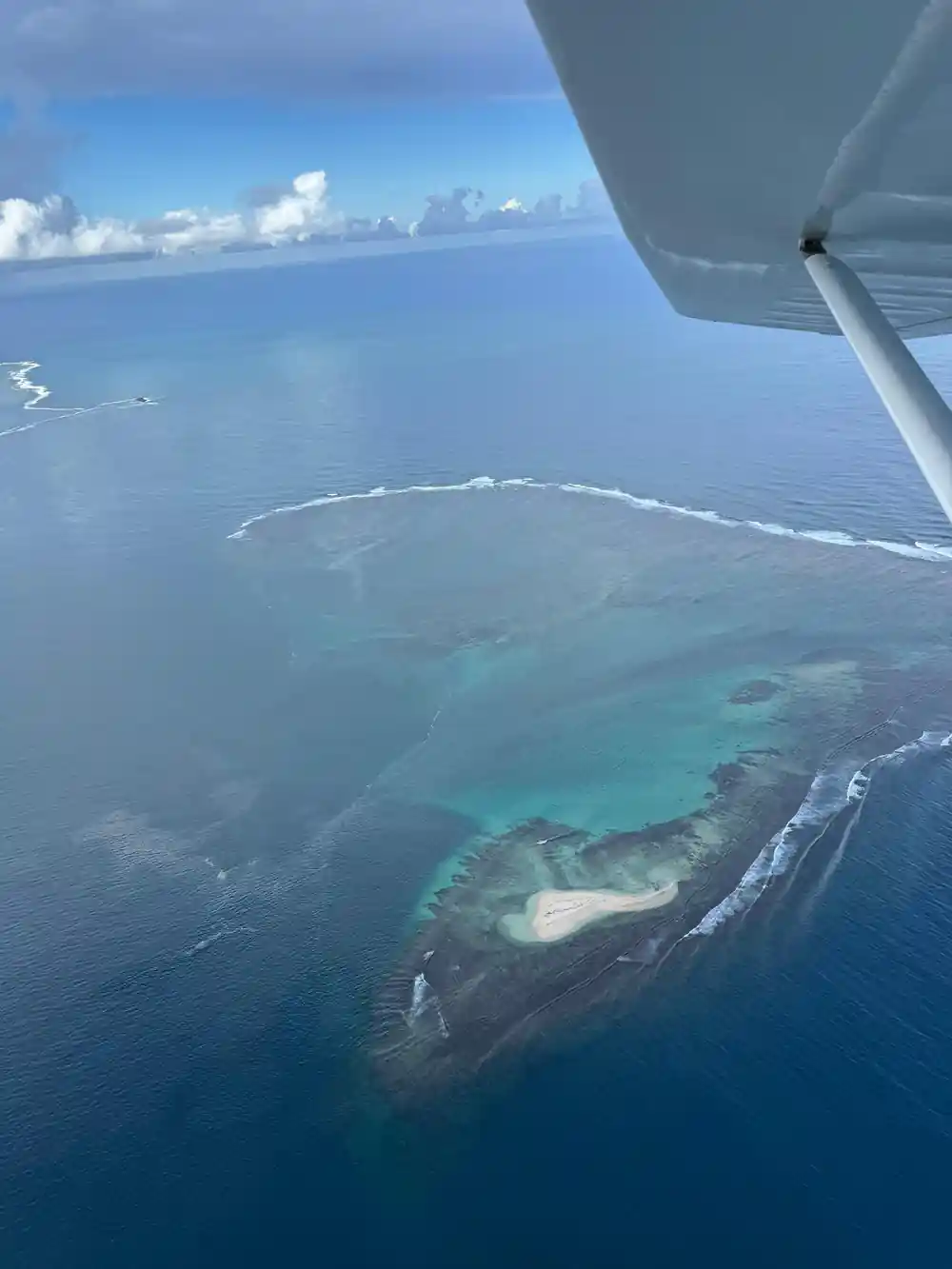
Shallow water over pale carbonate sand sends light back up. Deeper water absorbs the warm end of the spectrum and returns blue. Between the two there is a coral flat that reads dark, a drop-off that reads navy, and channels that cut through the shallows in lines you could not guess at from the ground. From the air these arrange themselves into bands, and the bands are legible: you can read the depth of the water by its colour, continuously, for kilometres.
The east is also where the island's largest river reaches the sea. The Grande Rivière Sud-Est comes down through a gorge and ends at a waterfall by the coast, and the sediment it and the tides push across the shelf is what produces the illusion the flight is named for.
The underwater waterfall, and which one this is
There is a famous photograph of Mauritius in which the seabed appears to pour off the edge of the island into an abyss. That one is taken at Le Morne, on the southwest corner, and it is the image most people have in their heads when they hear the phrase. It is not this one.
The east coast has its own version off Grand River South East, and the operator calls it the eastern underwater waterfall. The mechanism is the same: sand and silt drift across the shallow shelf, reach the point where the shelf ends, and spill down the slope through channels cut into the seabed. Seen from directly above, the moving sediment forms streaks that converge and fall away exactly like water going over a lip. Nothing is falling. The sea is flat.
It only works from height and from more or less overhead, which is why no boat trip sells it and why it is on this page rather than in a guidebook. It also means the flight length matters: the fifteen minute option does not reach it.
Taking off from the sea
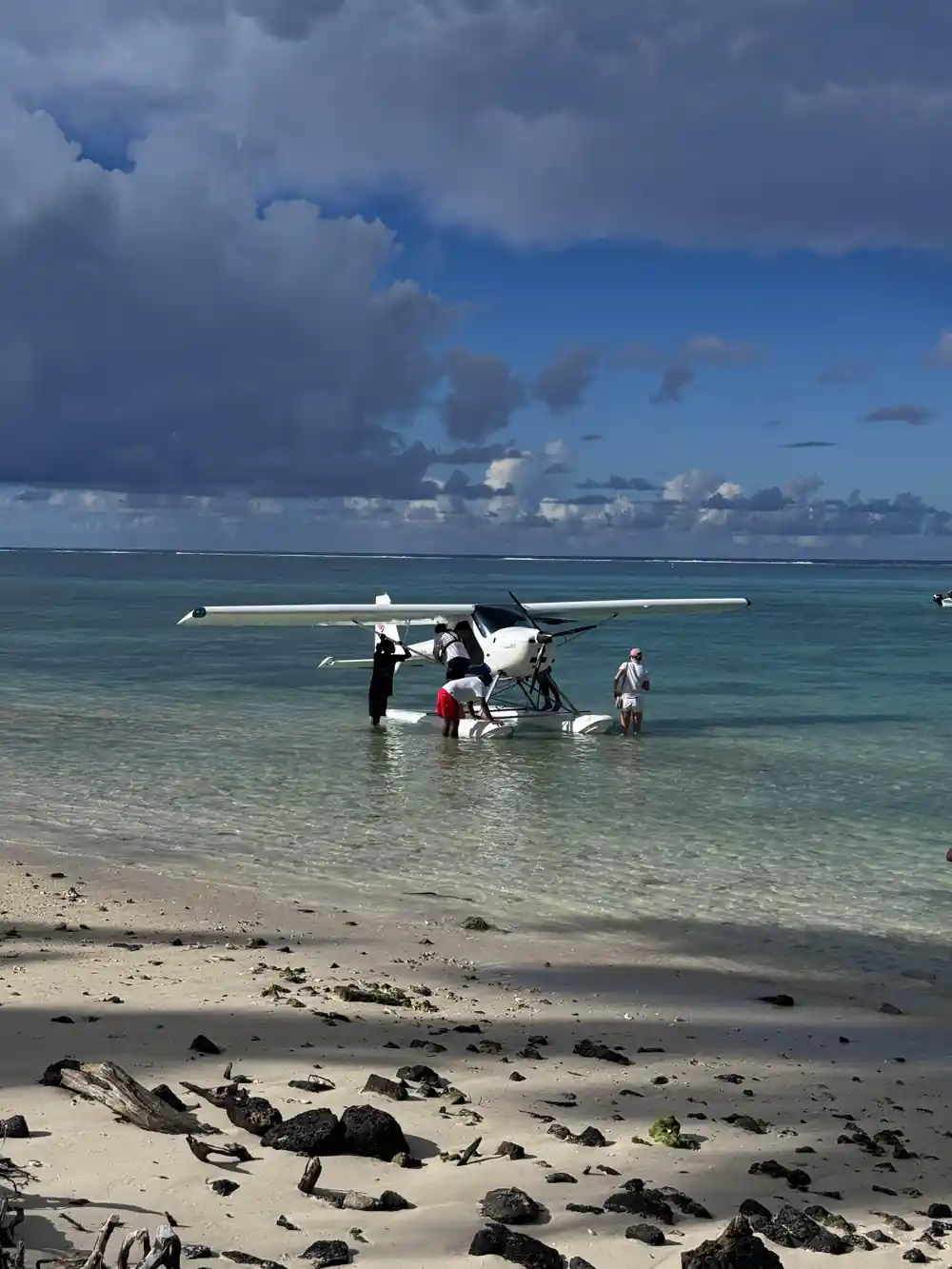
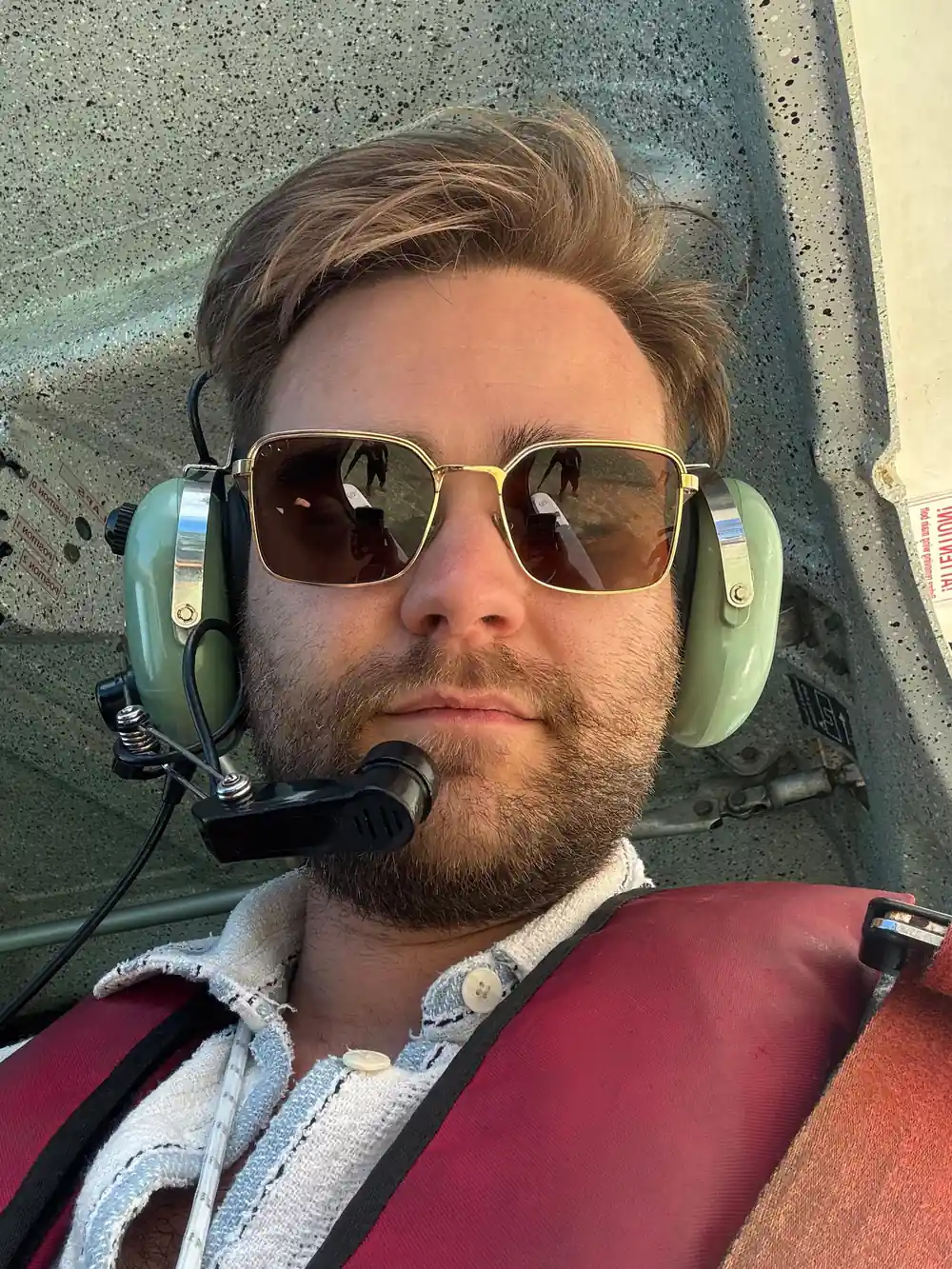
This is the part that unsettles people who have flown a hundred times, and it is worth describing because the anxiety is entirely about unfamiliarity. There is no terminal and no runway. You meet at an office on the beachfront, you are walked down the sand, and you get into the aircraft while it sits on the water on two floats. Your feet get wet.
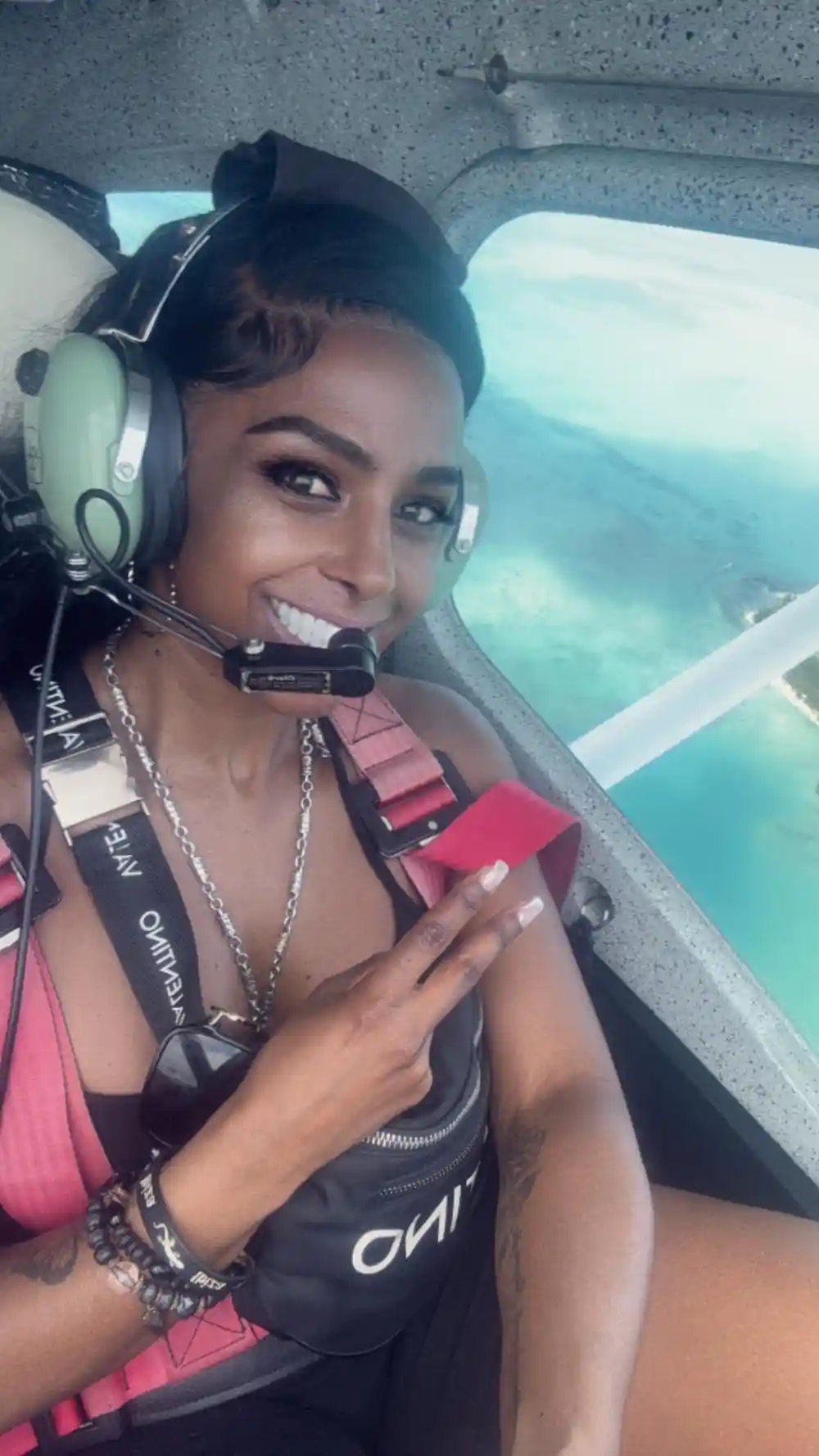
The take-off run is spray and noise and then, quite abruptly, quiet. A floatplane leaves the water at a low speed and climbs slowly, which means the transition is gentler than a jet's and the view starts immediately rather than after ten minutes of cloud. Landing is the same in reverse: a long shallow approach, a hiss as the floats touch, and a taxi back towards the beach.
It is a small aircraft, so you feel the air. On a calm morning that is nothing at all. On a breezy afternoon over a windward coast it is noticeable, which is one of several reasons the operator watches the forecast rather than the calendar.
Who can fly, and what stops a flight
There is a weight limit of 105 kilograms per passenger. It is not arbitrary and it is not negotiable at the beach: a light aircraft is flown to a weight and balance figure, and the operator has to know what is going in it. Bring a passport or an identity card.
Everything else is about comfort in a small cabin rather than rules. There is no jetway, so getting aboard from the water asks for a little mobility. Motion sickness is worth thinking about if you are prone to it, because a light aircraft moves more than an airliner does. Loose items are a problem in an aircraft where a window may be open, so hats and anything unsecured are best left behind.
The other thing that stops a flight is the weather, and on this coast that is not a formality. The east is the windward side of Mauritius. Wind, low cloud and rain all end a scenic flight, and the operator will move or cancel rather than fly a bad one, which is the correct decision and occasionally an inconvenient one. Free cancellation is offered on the booking.
How the day fits together
Arrive at least half an hour before the departure time. That is not padding: it covers the briefing, the walk to the aircraft and the boarding, and a slot on a light aircraft cannot be pushed back without moving everyone behind it.
The meeting point is the operator's office on the beachfront at Belle Mare, which is about an hour by road from the airport and rather longer from Grand Baie in the north. Transport is not included, so this is a taxi or a hire car, and the coastal road is easy driving but not fast.
Photographs and video from the aircraft are offered as an add-on rather than included. Whether that is worth it depends on how much you trust yourself to stop looking through a phone for twenty minutes, which is a real question over water this colour.